How To Camp On BLM Land
The largest manager of public lands in the US at 248+ million cares, the Bureau of Land Management (a.k.a. BLM) is primarily found out west and offers some of the most expansive opportunities for camping.
In this Guide:
Ways To Camp On BLM Land
Rules On BLM Lands
Reservations, Passes & Permits
How To Navigate BLM Lands
Stewardship and etiquette
What to expect On BLM Lands
How To Plan Trips On BLM Lands
What Is The Bureau Of Land Management (BLM)?
The Bureau of Land Management (under the Department of the Interior) oversees the largest portion of public land at about 248+ million acres, which is close to one out of every ten acres in the entire US. The lands of the BLM are used both for resource management (timber, natural resources, watersheds, wildfire management, etc.) and for the conservation of natural, historical and cultural areas. With a huge stake in public lands, the conservation areas that the BLM oversees are some of the best places for camping such as Wilderness Areas, National Monuments, National Conservation Lands, and National Historic Trails including the Lewis and Clark Trail.
Because of the easy accessibility and size, BLM lands attract a larger variety recreation seekers from traditional backpackers and hikers, off-roading enthusiasts, and hunters and recreational shooters. Additionally, much of the land is leased for livestock grazing, agriculture, and other commercial activities. For this reason, please be mindful of other people recreating, or when trails and camping areas intersect with non-public lands (please do not trespass).
Areas managed by the BLM (248+ million acres):
- Wilderness Areas (224 units+ out of 806)
- National Monuments (130+ units)
- National Recreation Sites
- National Conservation Lands
- Wilderness Study Areas
- Wilderness Areas
- Wild & Scenic Rivers
- National Scenic & Historic Trails
- Wilderness Study Areas
- Special Recreation Management Areas
- And others
Why Camp On BLM Land?
- Camping access: BLM lands comprise the majority of public lands out west, with contiguous tracts of desert, forest, and other ecosystems that are excellent for camping. Here you will find plenty of developed campgrounds, primitive campgrounds, and dispersed camping. With more off-roading and backcountry areas, there is a lot of room to explore.
- Solitude: Because of the expansiveness and accessibility, particularly in the desert regions, BLM lands truly provide some opportunities for deep solitude and escape from urban life.
- Flexible: Like many public lands, trips here can be planned spontaneously, often without permits or fees (but still with rules and limitations to protect the land).
Who Can Camp On BLM Land?
The BLM lands are open to any type of campers, from first-timers, hardcore enthusiasts, families, groups, and international visitors. So long as you respect the land, the rules, and other campers, you are welcome to camp here.
Ways To Camp On BLM Land
Camping can be understood in two parts: how you camp and where you camp.
How you can camp on BLM Land
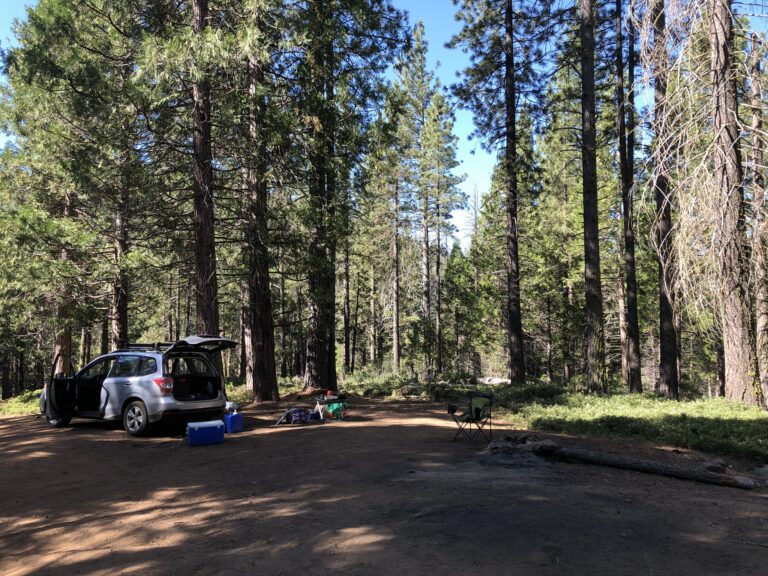
- Car camping: Driving up to a camping area and packing your gear in a car. This can be at a designated campground, primitive campground, or on your own as dispersed camping. Ultimately, anywhere you camp with your car is “car camping.”
- For a full guide on car camping, read our Car Camping Basics article
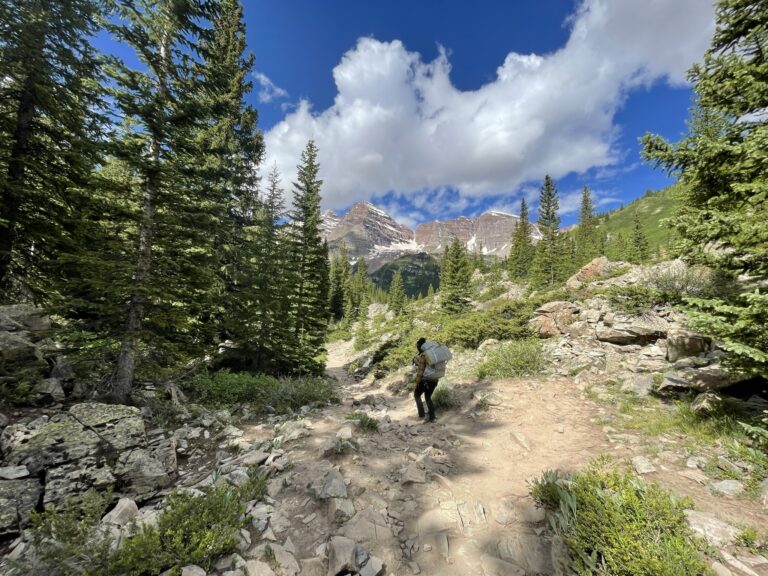
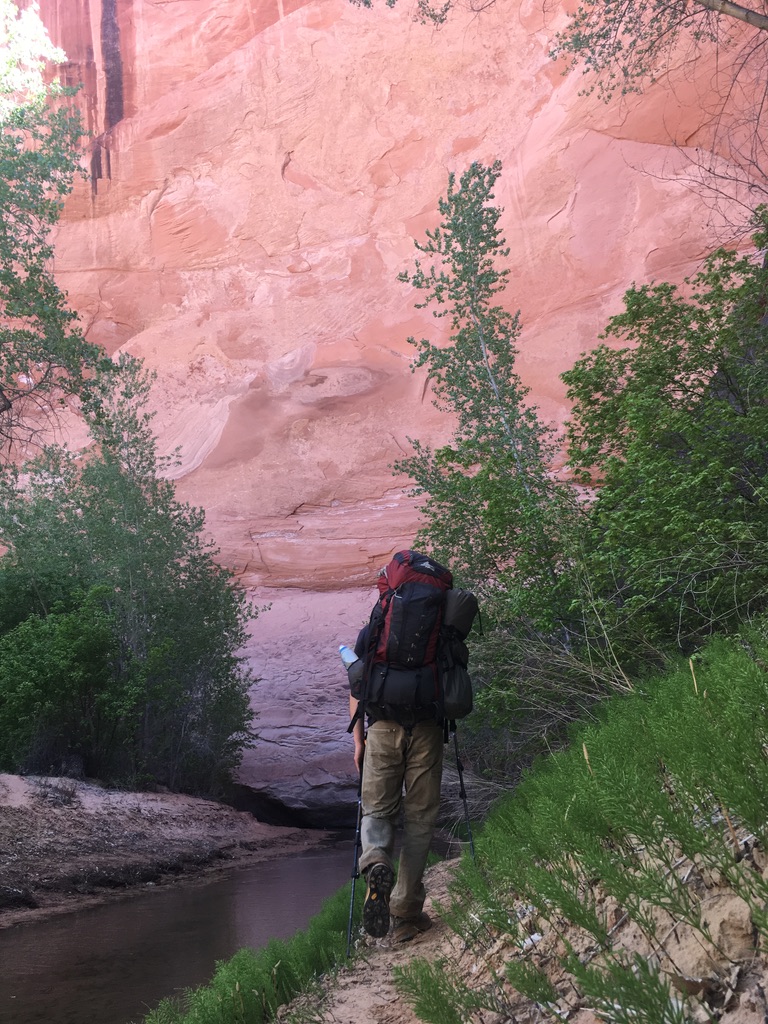
- Backpacking: Where you travel only by foot and carry all your gear, food, and supplies in a backpack. You could backpack to a dispersed camping area, developed campground, or primitive campground.
- For a full guide on backpacking, read our Backpacking Basics article
- Solo camping: Where you do any of the above, but by yourself. Why does this need a distinct category? Because it requires a different level of planning, resourcefulness, and skills that is worth reviewing independently.
- For a full guide on solo camping, read our Solo Camping Basics article
- Other types of camping available on BLM lands:
- Bike packing
- Pack rafting
- Glamping
- RV camping (boondocking)
- Animal packing
- Cowboy camping
Where you can camp on BLM Land
- Developed campgrounds: A designated camping area with basic amenities and facilities usually including fire rings, vault toilets (no water or flushing), tent platforms, potable water spigots, firewood for sale, and picnic tables. Oftentimes a campground host will be present to answer questions and collect fees. Amenities and facilities will vary depending on the campground. Many times, these campgrounds will have electric sites and hookups for RV’s and trailers.
- Primitive campgrounds: A designated camping area with little to no amenities or facilities, usually just a place to set up your tent. You may get lucky with a fire ring, but these campgrounds are mainly to provide safe areas for people to camp in more remote places and to help protect the landscape and wildlife by preventing excessive dispersed camping. These can be found on BLM access roads or trails.
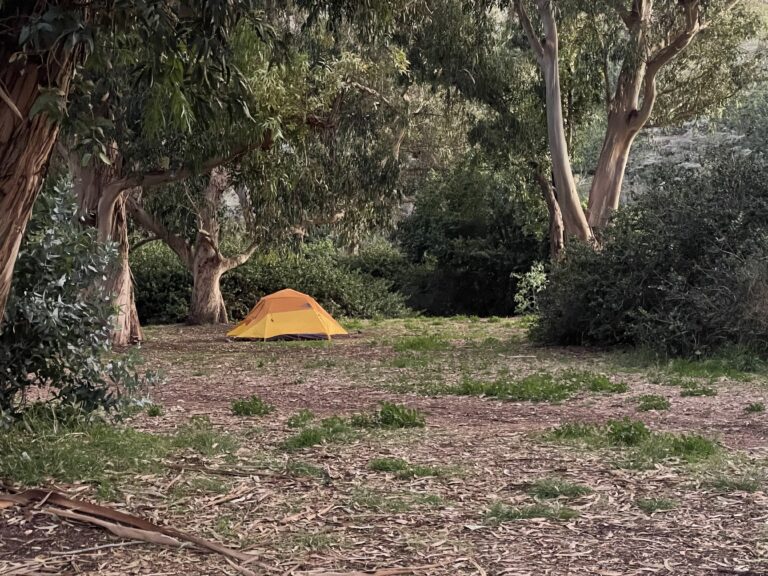
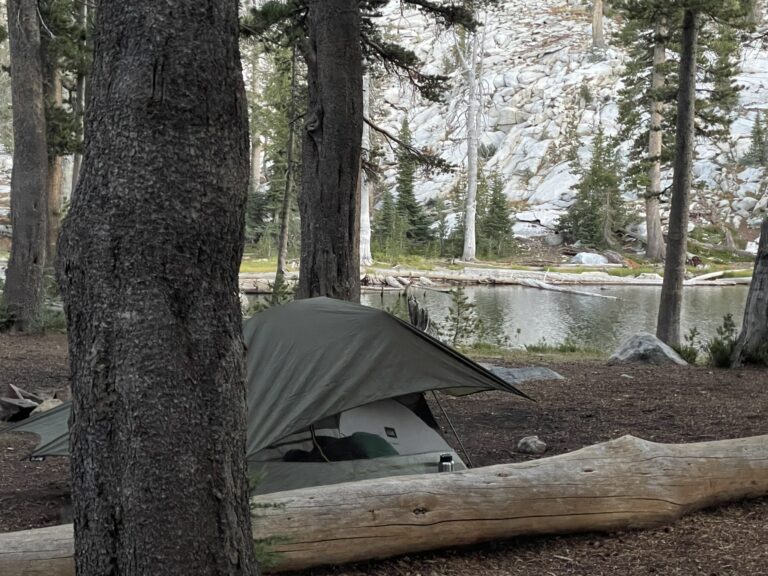
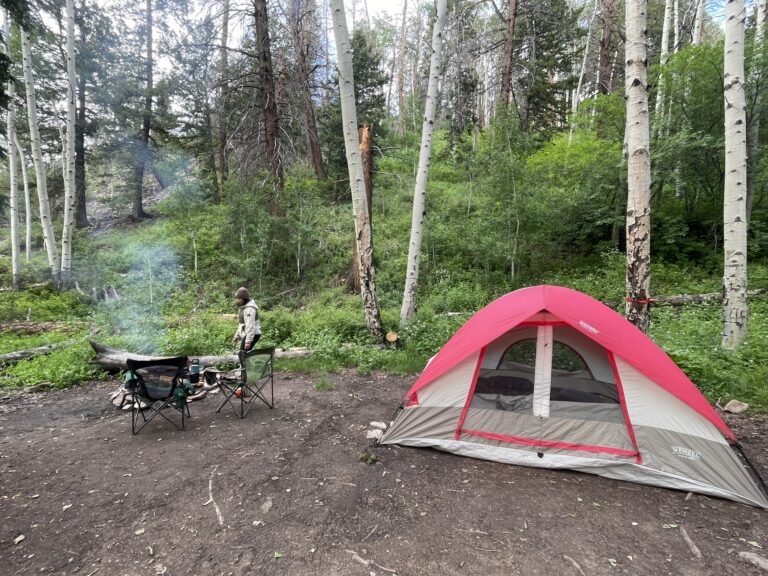
- Dispersed camping: Also known as backcountry camping or wild camping, this is camping on any public land without any developed campgrounds, facilities, or amenities. You establish your own campsite, or find one already established by previous campers. On BLM lands, you can go dispersed camping in your car down BLM access roads, by backpacking, bike-packing, or horseback, pack raft, and other means.
- For a full guide on car camping, read our Dispersed Camping Basics article
Rules On BLM Lands
These are rules enforced on BLM lands. Always check local orders for additional restrictions. Please leave the place better than you found it (check out the BLM website):
- Leave No Trace Principles
- Fire
- Build fires only where allowed.
- Fully extinguish fires before leaving.
- Follow all fire restrictions and bans.
- Camping
- Camp away from water sources, at least 100-200 feet from lakes, rivers, and streams depending on local regulations).
- Dispersed camping is generally allowed unless posted otherwise.
- Do not clear vegetation or damage natural features.
- Roads and Vehicles
- Drive only on BLM access roads that are open to the public.
- Off-roading rules vary per area, please check local regulations and restrictions.
- Trash
- Pack out all trash, food scraps, and gear. There is NO TRASH SERVICE.
- Natural and Cultural Resources
- Do not cut standing trees or remove plants, rocks, or artifacts.
- Leave historic and cultural sites undisturbed.
- Pets
- Keep pets under control and follow posted leash rules.
- Human Waste
- Use toilets when available.
- Otherwise, use wag bags and carry out your waste.
- If you must, please dig a proper cat hole away from water sources, trails, and camping areas.
Reservations, Permits, and Passes For BLM Lands
Most BLM lands do not charge a fee for general access. However, certain camping spots will require a reservation or permit.
Reservations
- Reservations are required for developed campgrounds, cabins, and certain overnight camping options.
- Reservations require a fee, which can vary.
- Most reservations for camping in the BLM can be made on rec.gov, while some are on a first-come, first-served basis. You can also call or visit your local BLM field office.
- Use the BLM site to explore available campsites – Where to camp on BLM land.
Permits
- Permits may be required for overnight backpacking and camping trips, especially when entering Wilderness Areas or accessing highly popular trails and sensitive areas.
- Some permits are free, and are self-issued.
- Some permits require a fee, which can vary.
- Permits often have a daily cap, and may require a lottery drawing.
- Many permits can be secured on rec.gov, while others are only available at local BLM field offices.
Passes
- Annual passes like the America the Beautiful pass typically covers entrance fees and day use areas to all federally managed lands including BLM lands. However, they do not cover the fees for campsites or permits.
How To Navigate BLM Lands
BLM lands have an extensive network of roads, trails, backcountry areas, and wildly varying terrain and elevations. Having the right maps for planning and exploring not only makes things easier, but they are critical for your safety.
Topographical Maps
These show elevation, terrain, and land features and are essential for any navigation. Physical topographical maps are strongly recommended. Never rely solely on your phone or GPS.
BLM Maps
Useful for understanding BLM boundaries, trails, campgrounds, and recreation areas:
- BLM Recreational Opportunities – Interactive Maps: Select the state you wish to explore, and then click the link for “BLM maps” for that state to find camping areas and more.
- BLM National Data Map – A more detailed digital map that key data points and boundaries such as natural resource areas, grazing allotments, and virtually everything the BLM manages.
Stewardship & Etiquette for Camping On BLM Lands
We can’t enjoy camping unless we all care to keep these places clean, safe, and accessible to all who use them. Like riding a bus, you’re in the public arena when camping and your presence always makes an impact. What kind of impact is up to you.
General Stewardship And Etiquette
- Understand the Leave No Trace Principles
- Keep light levels reasonable and respectful, especially floodlights.
- Keep noise levels reasonable and respectful, especially music.
- Do not ever feed, approach, or disturb any wildlife.
- Pack everything out, including trash.
- Do not book extra campgrounds that you don’t need.
- Leave the place better than you found it.
Car Camping Stewardship And Etiquette
- Do not leave your car running or your headlights on.
- Park in proper pull-offs and not on sensitive vegetation or off-limit areas.
- Do not steal other campers’ parking spots for convenience.
Backpacking Stewardship And Etiquette
- If dispersed camping, try to find and utilize an already established camping spot.
- Do not cut trails or switchbacks. This can damage vegetation and create erosion and flood risks.
- Do not disturb trail markers or cairns.
- Do not play music loudly unless necessary for safety (like in bear country).
What to expect when camping On BLM Lands
Notes About Camping On BLM Land:
- The BLM has a variety of uses and fewer restrictions in some cases, so be prepared for OHVs (off highway vehicles), mountain bikers, and other people participating in outdoor recreation. This is not to say it will be crowded, but don’t be shocked if you hear a random dirt bike a few miles away from your campsite.
General Camping expectations
- It always requires some hard work.
- There will be bugs.
- There will be bad weather.
- There will be spooky sounds.
- You will get dirty and smell.
- You will forget something.
- Your feet, back, and shoulders may be sore.
- It can feel a little scary at first.
- Weather exposure and falling tree limbs are way more of a threat than animal encounters.
- You will have a lot of fun.
How to Plan A Camping Trip On BLM Lands
- Determine which BLM land you’d like to explore (see navigation above)
- Determine what type of camping you want to do:
- Car camping
- Backpacking
- Determine where in the BLM you will do this:
- Developed campground
- Primitive campground
- Dispersed camping
- Call the local BLM field office or check the BLM website for:
- Fire restrictions
- Road access
- Trail access
- Weather conditions (snow, rain, wildfire watch)
- Purchase any fees, reservations, or permits for your adventure
- Learn the rules/etiquette of where you are camping
- Plan out your meals
- Test out your gear
- Let people know where you’re going
- Enjoy the journey
A Note on Public Lands Today
Public lands in the United States exist because people chose long-term care over short-term gain. Lands that had been previously been stewarded for generations by Indigenous nations. That protection is never guaranteed. It depends on laws, funding, leadership, and public attention.
Unfortunately, recent federal decisions have weakened protections and increased pressure from extractive use and private enterprises, putting ecosystems, natural resources, cultural sites, historical sites, the economy, and public access and benefits at major risk.
If you appreciate public lands, and the benefits they provide to all of us regardless of political disposition, there are many ways to take action and support them.