How To Camp In Wilderness Areas
Wilderness Areas are one of the most protected designations that can be given to public land. These areas are essential to preserving natural resources and wildlife habitat, and only offer primitive camping opportunities.
In this Guide:
Who Can Camp In Wilderness Areas?
Ways To Camp In Wilderness Areas
Rules In Wilderness Areas
Reservations, Passes & Permits
How To Navigate Wilderness Areas
Stewardship and etiquette
What To Expect In Wilderness Areas
Plan A Trip In Wilderness Areas
What Is A Wilderness Area?
A “Wilderness Area” is a specific legal designation for federal public land that focuses on preserving that natural landscape through some stricter regulations to maintain the natural and primitive landscape. Most notable is you can only access these areas by foot – no motorized or mechanized transport allowed, and you will not find any developed areas or amenities. Ideal for those who enjoy more primitive camping and recreation.
Established by the Wilderness Act of 1964, Wilderness Areas are co-managed by the four federal agencies (USFS, NPS, BLM, USFWS) spanning over 111 million acres across 806 total units in 44 states (none designated in Connecticut, Delaware, Iowa, Kansas, Maryland, Rhode Island).
Examples of Wilderness Areas
- Uncompahgre Wilderness
- Big Horn Mountains Wilderness
- Jennie Lakes Wilderness
- Panther Den Wilderness
- Labyrinth Canyon Wilderness
- Ibex Wilderness
- Piney Creek Wilderness
- Sandwich Range Wilderness
- John Muir Wilderness
- Big Island Lake Wilderness
- Headwaters Wilderness
- La Madre Mountain Wilderness
Why Camp In Wilderness Areas?
- Primitive camping: Camping out here is always a more primitive experience due to the rules and regulations in place. So for those who enjoy the challenge of being more resourceful and camping with limited gear, Wilderness Areas are great.
- Chances for solitude: Once again, due to the rules and regulations in place, Wilderness Areas are great places to find solitude. This is not to say all Wilderness Areas are treacherous, intense landscapes, but the more restrictive access weeds out a lot of people after a few miles in.
- A glimpse into places unaffected by mankind: Focusing on the protection of natural landscapes and wildlife within them, Wilderness Areas offer a glimpse into landscapes that have been less affected and polluted by mankind. While our presence can be found almost anywhere, it’s less likely here, which is great.
Who can Camp In Wilderness Areas?
Wilderness Areas are open to any type of campers from first-timers, hardcore enthusiasts, families, groups, and international visitors. So long as you respect the land, the history, the rules, and other visitors, you are welcome to camp here.
All camping requires caution and safety, but please note that these risks may be increased in Wilderness Areas due to the lack of roads, amenities, and restrictions like foot traffic only.
Ways To camp In Wilderness Areas
Camping can be understood in two parts: how you camp and where you camp.
How you can Camp In Wilderness Areas
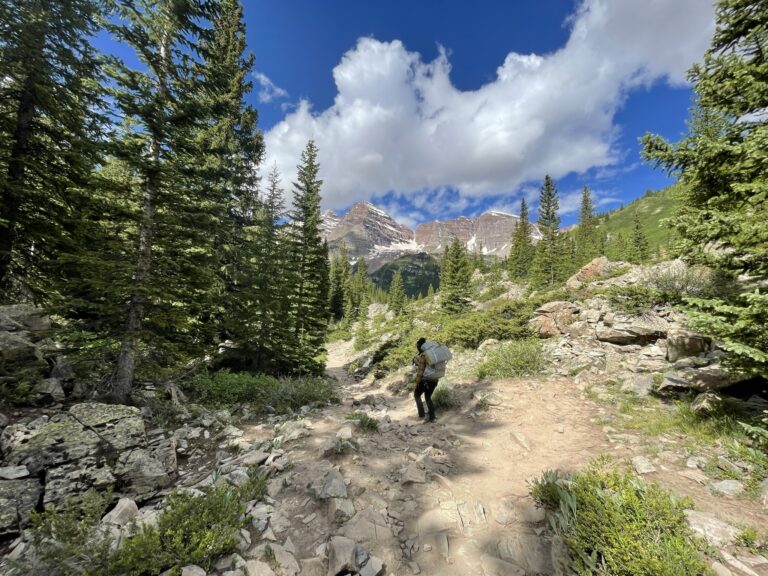
- Backpacking: Where you travel only by foot and carry all your gear, food, and supplies in a backpack. In Wilderness Areas, this is the primary means of camping since you are only allowed to travel by foot or non-motorized/non-mechanized transport.
- Solo camping: Where you do the above, but by yourself. Why does this need a distinct category? Because it requires a different level of planning, resourcefulness, and skills that is worth reviewing independently.
- Other types of camping available in Wilderness Areas:
- Pack rafting
- Animal packing
- Any non-motorized/non-mechanized transport
Where you can Camp In Wilderness Areas
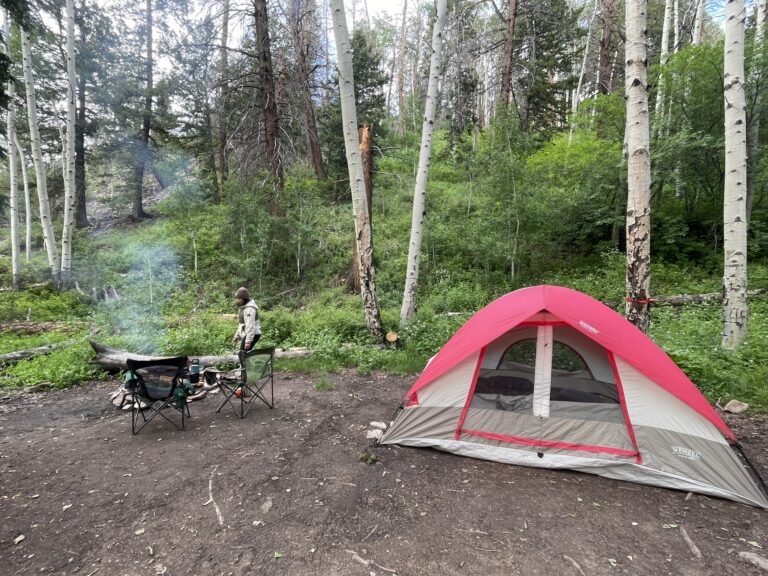
- Dispersed camping: Also known as backcountry camping or wild camping, this is camping on any public land without any developed campgrounds, facilities, or amenities. You establish your own campsite, or find one already established by previous campers (this is the preferred and ideal situation to reduce your impact). This is typically the most common way to camp in Wilderness Areas.
- Primitive campgrounds: A designated camping area with little to no amenities or facilities, usually just a place to set up your tent. You may get lucky with a fire ring, but these campgrounds are mainly to provide safe areas for people to camp in more remote places and to help protect the landscape and wildlife by preventing excessive dispersed camping.
- Restricted types of camping (not allowed):
- Car camping: There are no roads or motorized vehicles allowed in Wilderness Areas, so that rules out car camping. However, most Wilderness Areas are surrounded by some other type of public land that may have roads, like a National Forest, which allows you to car camp near the borders of Wilderness Areas.
- Developed campgrounds: Due to the more limited access and restriction on roads, developed campgrounds with running water and facilities are not found Wilderness Areas.
- Other: Any type of camping that uses motorized or mechanical transport is forbidden.
Rules In Wilderness Areas
There are common rules shared among Wilderness Areas, but each one can often have its own set of rules or regulations.
- Unique rules at each Wilderness Area
- Visit Wilderness Connect – find a wilderness . Here you can type in the name of a State or Wilderness Area, or explore their interactive map. Once you find a Wilderness Area, check the “Rules and Regulations” menu.
- Leave No Trace Principles
- Fire
- Build fires only where allowed.
- Fully extinguish fires before leaving.
- Follow all fire restrictions and bans.
- Camping
- Camp away from water sources, at least 100-200 feet from lakes, rivers, and streams depending on local regulations.
- Do not clear vegetation or damage natural features.
- Roads and vehicles
- Not allowed
- Trash
- There is NO TRASH SERVICE in Wilderness Areas. You must pack out all trash, food scraps, and gear.
- Natural and Cultural Resources
- Do not cut standing trees or remove plants, rocks, or artifacts.
- Leave historic and cultural sites undisturbed.
- Pets
- This depends on the Wilderness Areas, please check with local restrictions.
- Human Waste
- Use wag bags and carry out your waste.
- If you must, please dig a proper cat hole away from water sources, trails, and camping areas.
Reservations, Permits, and Passes For Wilderness Areas
Depending on the Wilderness Area, camping may be free or might require reservations and permits for a fee. Visit Wilderness Connect – find a wilderness to research areas you’re interested in exploring.
Reservations
- Reservations are not always required, but may be necessary for certain primitive campgrounds or dispersed camping trips.
- Reservations require a fee, which can vary.
- Most reservations for camping in Wilderness Areas can be made on rec.gov, while some are on a first-come, first-served basis.
Permits
- Permits are not always required, but may be necessary for some overnight camping trips in Wilderness Areas.
- Some permits are free, and are self-issued.
- Other permits require a fee, which can vary.
- Permits often have a daily cap, and may require a lottery drawing.
- Most permits can be secured on rec.gov, or some can be picked up directly on site at a local ranger station if available.
Passes
- Annual passes like the America the Beautiful pass typically covers entrance fees and day use areas to all federally managed lands. However, they do not cover the fees for campsites or permits for Wilderness Areas.
How To Navigate Wilderness Areas
When you’re entering a Wilderness Area, it is critical to have proper navigation. Access, communication and help is very limited, so be prepared with some of the resources below.
Topographical Maps
These show elevation, terrain, and land features and are essential for any navigation. Physical topographical maps are strongly recommended. Never rely solely on your phone or GPS.
Interactive Digital Maps
Managed by the University of Montana, Wilderness Connect provides interactive maps allow you to explore all designated Wilderness Areas.
Stewardship & Etiquette for Camping In Wilderness Areas
We can’t enjoy camping unless we all care to keep these places clean, safe, and accessible to all who use them. Like riding a bus, you’re in the public arena when camping and your presence always makes an impact. What kind of impact is up to you.
General Stewardship And Etiquette
- Always look up the local and unique rules for the National Park you’re visiting.
- Understand the Leave No Trace Principles
- Keep light levels reasonable and respectful, especially floodlights.
- Keep noise levels reasonable and respectful, especially music.
- Do not ever feed, approach, or disturb any wildlife.
- Pack everything out, including trash.
- Do not book extra campgrounds that you don’t need.
- Leave the place better than you found it.
Car Camping Stewardship And Etiquette
- Do not leave your car running or your headlights on.
- Park in proper pull-offs and not on sensitive vegetation or off-limit areas.
- Do not steal other campers’ parking spots for convenience.
Backpacking Stewardship And Etiquette
- Do not cut trails or switchbacks. This can damage vegetation and create erosion and flood risks.
- Do not disturb trail markers or cairns.
- Do not play music loudly unless necessary for safety (like in bear country).
What to expect when camping In Wilderness Areas
Notes About Camping In Wilderness Areas:
- Due to the remote access, it is highly recommended to take extra planning and precaution when camping overnight in Wilderness Areas. If it is your first time, it is recommended to go with someone who has experience with dispersed backpacking, or keep the distance relatively short.
General Camping expectations
- It always requires some hard work.
- There will be bugs.
- There will be bad weather.
- There will be spooky sounds.
- You will get dirty and smell.
- You will forget something.
- Your feet, back, and shoulders may be sore.
- It can feel a little scary at first.
- Weather exposure and falling tree limbs are way more of a threat than animal encounters.
- You will have a lot of fun.
How to Plan A Camping Trip In Wilderness Areas
- Determine which Wilderness Area you’d like to explore
- Determine what type of camping you want to do:
- Backpacking
- Other (no motorized or mechanized transport)
- Determine where in the Wilderness Area you will do this:
- Dispersed camping
- Primitive campground
- Call the local Ranger Station for:
- Fire restrictions
- Road access
- Trail access
- Weather conditions (snow, rain, wildfire watch)
- Purchase any fees, reservations, or permits for your adventure
- Learn the rules/etiquette of where you are camping
- Plan out your meals
- Test out your gear
- Let people know where you’re going
- Enjoy the journey
A Note on Public Lands Today
Public lands in the United States exist because people chose long-term care over short-term gain. Lands that had been previously stewarded for generations by Indigenous nations. That protection is never guaranteed. It depends on laws, funding, leadership, and public attention.
Unfortunately, recent federal decisions have weakened protections and increased pressure from extractive use and private enterprises. This puts ecosystems, natural resources, wildlife, cultural sites, historical sites, the economy, and public access at major risk.
If you appreciate public lands and the benefits they provide to all of us, please help support them.
Other Camping Resources
Camping Foundations
- An Intro To Camping
- Backpacking Basics
- Car Camping Basics
- Solo Camping Basics
- Dispersed Camping Basics
Public Lands
- An Intro To Public Lands
- How To Camp In National Forests
- How To Camp On BLM Land
- How to Camp In National Parks
Glossary
Click to expand
- Car camping – Driving up to a camping area and packing your gear in a car. This can be at a designated campground, primitive campground, or on your own as “dispersed camping” (see below). Ultimately, anywhere you camp with your car is “car camping.”
- Developed campgrounds – A designated campground with basic amenities and facilities including fire rings, vault toilets, tent platforms, potable water spigots, firewood for sale, and picnic tables. Oftentimes a campground host will be present to answer questions and collect fees. Amenities and facilities will vary depending on the campground. Many times these campgrounds will have electric sites and hookups for RV’s and trailers.
- Primitive campgrounds – A designated camping area with little to no amenities or facilities, usually just a place to set up your tent. You may get lucky with a fire ring, but these campgrounds are mainly to provide safe areas for people to camp in less accessible areas, and to help protect the landscape by preventing excessive dispersed camping.
- The Bureau of Land Management (BLM): The BLM oversees the largest portion of public land with about 250 million access. BLM lands are very accessible, and typically have fewer restrictions than you’d find on other public lands, which attracts a large variety of adventure seekers and campers. This includes (but is not limited) to places like Wilderness Areas and National Conservation Lands.
- The U.S. Forest Service: The USFS manages almost 200 million acres of land and provides some of the best places to camp among majestic forests, mountains, and a great way to escape the crowds. This includes (but is not limited) to places like National Forests and National Grasslands.
- The National Park Service: The NPS manages 85 million acres and over 425+ units, including some of the most scenic parts of the country like Olympic National Park and Zion National Park, as well as National Monuments and other gems. Everything from designated camping, backpacking, and car camping can be had in public lands managed by the National Park Service. This includes (but is not limited) to places like National Parks, National Rivers, and Wilderness Areas.
- Wilderness Areas: Each agency manages Federal Wilderness Areas with over 111 million acres and 806+ units, Wilderness Areas are the highest level of protection and designation public land can receive. Only accessible by foot traffic (no cars, bikes, or mechanized/motorized travel) it certainly offers the chance to see some of the most remote and pristine wilderness in the country, and is excellent for wildlife and natural ecosystems. However, the subject of management and the notion of “untouched” wilderness has received some criticism over the years as potentially not the healthiest way to manage wild lands.
- The US Fish and Wildlife Service: The US Fish and Wildlife Service manages 95 million acres on land, and over 755 million acres on water across all 50 US States, which is mostly composed of units called National Wildlife Refuges. Because the agency’s main goal is to protect and restore wildlife species and ecosystems, very few of them have camping areas. This includes (but is not limited) to places like Wilderness Areas and National Wildlife Refuge Units.