Camping Gear For Beginners
Camping gear. There’s a lot of it. But you don’t need to fall for the buzz words and expensive items advertised on social media. Start with the basics, don’t overthink it, and then you’ll eventually build out the perfect gear collection for your camping needs and preferences.
In this Guide:
Renting vs buying
What gear to buy
Car camping gear
Backpacking gear
Cold weather gear
Hot weather gear
Rainy weather gear
Gear for kids
Gear for pets
Interactive gear checklist
Resources
Glossary
A Quick Intro To Camping Gear
When you’re starting out, camping gear requires a thoughtful approach. Establishing your collection of camping gear does not have to be overwhelming or difficult, but there are important considerations to ensure you don’t put yourself at risk from minor discomfort to your safety.
Why You Need Different Gear For Different Trips
When it comes to gear, all camping is not the same. Depending on factors like the type of camping (car camping, backpacking), weather, and terrain, you will need different gear to be comfortable and safe.
One universal rule is always bring the ten essentials, no matter how or where you’re camping. But as you discover what type of camping you enjoy, and the areas you have access to, you’ll quickly learn your gear is not always transferrable from one trip to the next. That comfy air mattress or cot you used when car camping? That won’t be suitable for a backpacking trip. That hammock hanging between trees in the forest won’t work so well in the desert.
Renting vs Buying Camping Gear
If you’re just beginning, renting (or borrowing) gear is highly recommended for some of the bigger ticket items like a tent and sleeping bag. For some of the smaller items (such as headlamps or tarps) it may be worth purchasing even if you don’t end up loving camping.
While we mentioned above that you don’t have to splurge, it’s best to test a few items out and spend less in order to get a feel for what you like (for example, I’ve been camping for over 30 years and I have rarely enjoyed air pads for sleeping, and wasted plenty of money from cheap ones to $300 ones).
Budget vs Premium Camping Gear
If you’re just beginning, you can be perfectly equipped with more budget friendly (not poorly made) camping gear options. There is no need to splurge on expensive or premium gear until you’re more confident in what type of gear works best for you.
However, there are certain items (critical and not) that are worth the extra money for a premium model or version. And once you know what you like, you’ll feel better spending that extra cash.
What Camping Gear To Buy As A Beginner
Start with “The ten essentials”
For any camping trip you need the ten essentials. Precisely which items you use for each category will really depend on where and how you’re camping.
- Shelter – tarp, bivvy sac, tent, anything to keep you covered
- Medical kit – up to date with medications and everything
- Food/nutrition – non-perishable, freeze-dried, whatever will keep you full
- Water and filtration – always have plenty of water and a way to filter it
- Light source – headlamp, lantern, flashlight, anything to see
- Fire source – matches, lighter, ferro rod, magnesium strips
- Navigation – compass and a map, never go without it
- Clothing and insulation – always have the three W’s for clothing (wicking, warmth, weather)
- Sun protection – sunscreen is essential when exposed
- Tool/knife – always bring a good knife or multi-tool for safety and craftiness
Other Recommended Camping Gear For Beginners
Once you have the ten essentials covered, work on acquiring the items below to round out your gear.
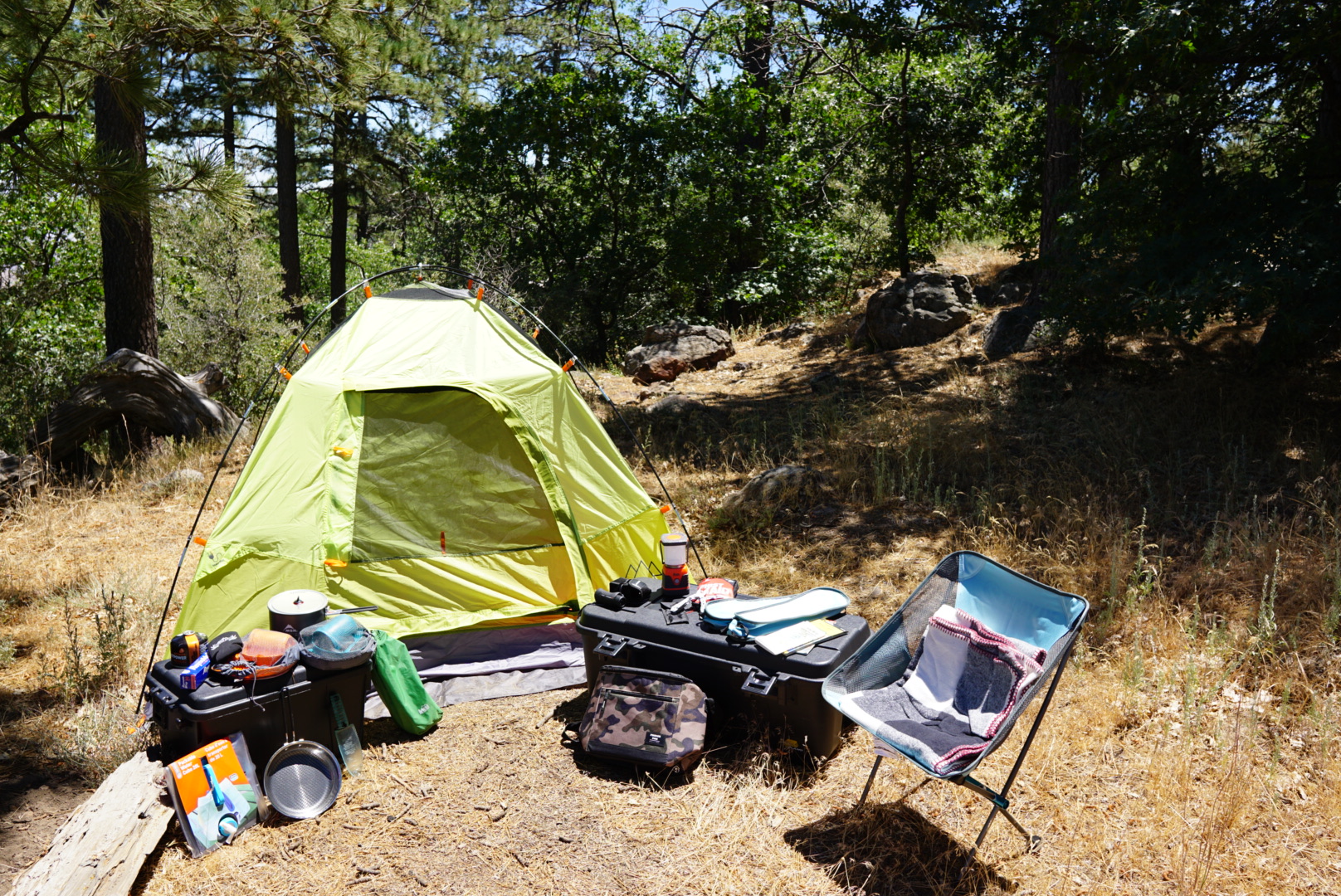
Simple cookware – a set of camping pots and pans, ideal stackable and compact
Stove/fuel – a portable stove and butane fuel canisters
Camping chair – does not have to be a compact one, get a regular sized chair
Sleeping bag – rated for the areas you’ll be camping
Sleeping pad – air, foam, combo, lot’s of options
Camping pillow – compact and portable
Lantern – very helpful to not use your headlamp constantly
Extra blankets (wool) – many different uses and worth the purchase
Daypack – hard to explore outside camp without a backpack
Duffel bag and camping boxes – ideal for organizing clothes and gear, and keeping it dry and clean
Cordage – paracord and rope will come in handy for many things
Hatchet – essential if you want to chop wood for a good campfire
Extra tarp – emergency rainfly, wood cover, ground cover, and more
Car camping – Gear Recommendations
For a more comfortable and safer car camping trip, we recommend considering the camping gear below. This is in addition to the ten essentials and other camping gear for starters.
Spare tire – more essential if you’re going down forest service roads or backcountry roads
Extra blankets (wool) – for ground insulation and body coverage
Insulated cooler – keep your food clean and cool
Larger water container – for drinking, handwashing, dishwashing, putting out the fire
Larger kitchen stove – single stove, double burners, or just campfires are still great
Shade cover/tent – depending on the area or weather, these make for a great hangout and shelter
Sleeping cot – depends on your preference, but these can make a huge difference for sleeping
Air mattress – depends on your preference, but you can potentially go large with a queen mattress
Jumper cables – trust us, you do not want to be stuck camping with a dead battery
Wiper fluid – dirt, snow, rain, whatever it is, have wiper fluid
Small camping table – plenty of foldable table options that are great for cooking and hanging out
Bug spray – get ahead of the bug bites
Soap/hand sanitizer – your hands get dirty quick out there, be sure to clean them
Trash bags – there is (almost) never any trash service, please bring bags and keep our lands clean
Toilet paper and wet wipes – don’t rely on campgrounds and remote areas having them, bring your own
What not to bring When Car Camping
Floodlights or overbearing light sources – lights are critical, but it should not look like daylight. Please be respectful to other campers
Full sized furniture – get cozy, but don’t overdo it with too many items
Loud speakers – always keep noise levels to a minimum when camping in public areas, and be respectful to other campers
For a full guide on car camping, read our Car Camping Basics article
Backpacking – Gear Recommendations
For a more comfortable and safer backpacking trip, we recommend considering the camping gear below. This is in addition to the ten essentials and other camping gear for starters.
Proper backpack – this is arguably the most critical part of the backpackers gear set, so b sure your bag is the right size and adjusted to fit properly.
Hiking poles – not critical, but these can really make a difference and have multi-purposes
Proper hiking boots or shoes – for yours and everyones safety, don’t wear tennis shoes out there
Bear/food canister – whether you’re hanging it or storing it ground level, have a proper container away from your tent
Water bladder – a nice container or bladder to gather extra water can make a huge difference
Satellite communicator – depending where you’re going this can be a life saver
Blister kit/moleskin – no matter how many years and miles, those blisters will get you
Hat – for sun, warmth or both
Sunglasses – don’t stare at the sun
What not to bring When Backpacking
Heavy cookware – always go lighter here if you can
Cotton clothing – this is the “killer” clothing for outdoor activities because it retains moisture
Glass containers – heavy, and can create some less than ideal cleanups and hazards
For a full guide on backpacking, read our Backpacking Basics article
Cold Weather Camping – Gear Recommendations
For a better time when camping in cold weather, we recommend considering the camping gear below. This is in addition to the ten essentials and other camping gear for starters.
Proper winter clothing – the three W’s for clothing (wicking, warmth, weather)
Extra blankets (wool) – for ground insulation and body coverage
Insulated sleeping pad – with a high enough R-value to keep the ground from pulling away your heat
Hand and feet warmers – great for warming up your sleeping bad or in the early morning hours
Nalgene for hot water – fill this with hot (not scalding) water and keep it at your feet or near your chest
Extra tarps – for protection from snow and other moisture
Balaclava/neck gaiter – critical for sleeping comfortably and safely at night
Beanie – also critical for sleeping comfortably and safely at night
What not to bring When Camping in Cold Weather
Cotton clothing – this is the “killer” clothing for outdoor activities because it retains moisture
Hot Weather Camping – Gear Recommendations
For a more comfortable and safer trip in hot weather, we recommend considering the camping gear below. This is in addition to the ten essentials and other camping gear for starters.
Insulated cooler – keep your food clean and cool
Towels for your cooler – stuff your cooler with towels to remove airflow, which improves the insulation
Shade cover/tent – a shade tent bring a lot of relief during the hot weather, better if it has some walls
Battery powered fan – helps with evaporation and staying cool
Extra tarp – for additional shade or protection
Towels for wetting – dampening a towel to cover your face or neck helps with the heat
Electrolyte packets – don’t just drink water, make sure you replace electrolytes, even with light activity
What not to bring When Camping In Hot Weather
Cotton clothing – this is the “killer” clothing for outdoor activities because it retains moisture
Rainy Weather Camping – Gear Recommendations
For a more comfortable and safer trip in the rain, we recommend considering the camping gear below. This is in addition to the ten essentials and other camping gear for starters.
Shade cover/tent – these make for a great hangout and shelter when it’s raining
Extra tarp – for additional protection
Extra set of dry clothes and shoes – however you can, make sure you have dry clothes as a backup
Clothes and shoes for getting wet – bring clothes you don’t mind getting wet or dirty
Duck back – this is a rain cover for your backpack, a trash bag can be a suitable makeshift version
Extra trash bags or grocery bags – for stashing wet clothes and dry clothes
What not to bring When Camping In Rainy Weather
Cotton clothing – this is the “killer” clothing for outdoor activities because it retains moisture
Camping With Kids – Gear Recommendations
For a more comfortable and safer trip with your kids we recommend considering the camping gear below. This is in addition to the ten essentials and other camping gear for starters.
Games (frisbee, cards, board game) – nature is fun enough, but have games for the active minds
Headphones (if they plan to watch movies) – we get it, so if you really need to bring an iPad or screen, please bring headphones for your kids to watch and be respectful to other campers
Plenty of snacks – nothing like a good snack to keep kids happy
Kids headlamps – readily available, make sure you have one that fits your kids’ head
Children’s first aid additions (medication, etc.) – should always be in your kit, but make sure you bring all the other items your children may need
Life jackets if near water – lakeside, rivers, the ocean, don’t take any risks and bring proper safety gear
What not to bring When Camping With Kids
Too many electronics – again, we get it, but if bringing electronics please be mindful and respectful of other campers who are there to avoid the extra noise and light we experience every day
Camping With Pets – Gear Recommendations
For a more comfortable and safer trip with your pets, we recommend considering the camping gear below. This is in addition to the ten essentials and other camping gear for starters.
Leash and tie-out stake – let that dog roam and have fun…within reason
Pet first aid kit – any special bandages or kits for your pet
Poop bags – dog poop is not ok to leave in the wild, please always pick it up and dispose of it properly
Cozy bed and blanket – they need a cozy space, keep em comfy
Glow in the dark collar rings – this does wonders when you need to walk your dog at night or in the dark
Dog shoes – sharp rocks, needles, and sadly broken glass and garbage are out there, so please protect your pet’s feet
Food containers – just like human food, have proper storage and sealed containers for your pets’ food
What not to bring When Camping With Pets
Human food as treats – just not a great idea, anyway.
Interactive Camping Trip Planner & Checklist
Download a free gear and planning checklist for all your camping trips. Duplicate it for Notion (free acct. required): Free Guide: Camping Trip Gear & Packing Checklist
Resources
Other useful camping guides:
Glossary
Click to expand
- Car camping – Driving up to a camping area and packing your gear in a car. This can be at a designated campground, primitive campground, or on your own as “dispersed camping” (see below). Ultimately, anywhere you camp with your car is “car camping.”
- Developed campgrounds – A designated campground with basic amenities and facilities including fire rings, vault toilets, tent platforms, potable water spigots, firewood for sale, and picnic tables. Oftentimes a campground host will be present to answer questions and collect fees. Amenities and facilities will vary depending on the campground. Many times these campgrounds will have electric sites and hookups for RV’s and trailers.
- Primitive campgrounds – A designated camping area with little to no amenities or facilities, usually just a place to set up your tent. You may get lucky with a fire ring, but these campgrounds are mainly to provide safe areas for people to camp in less accessible areas, and to help protect the landscape by preventing excessive dispersed camping.
- The Bureau of Land Management (BLM): The BLM oversees the largest portion of public land with about 250 million access. BLM lands are very accessible, and typically have fewer restrictions than you’d find on other public lands, which attracts a large variety of adventure seekers and campers. This includes (but is not limited) to places like Wilderness Areas and National Conservation Lands.
- The U.S. Forest Service: The USFS manages almost 200 million acres of land and provides some of the best places to camp among majestic forests, mountains, and a great way to escape the crowds. This includes (but is not limited) to places like National Forests and National Grasslands.
- The National Park Service: The NPS manages 85 million acres and over 425+ units, including some of the most scenic parts of the country like Olympic National Park and Zion National Park, as well as National Monuments and other gems. Everything from designated camping, backpacking, and car camping can be had in public lands managed by the National Park Service. This includes (but is not limited) to places like National Parks, National Rivers, and Wilderness Areas.
- Wilderness Areas: Each agency manages Federal Wilderness Areas with over 111 million acres and 806+ units, Wilderness Areas are the highest level of protection and designation public land can receive. Only accessible by foot traffic (no cars, bikes, or pets) it certainly offers the chance to see some of the most remote and pristine wilderness in the country, and is excellent for wildlife and natural ecosystems. However, the subject of management and the notion of “untouched” wilderness has received some criticism over the years as potentially not the healthiest way to manage wild lands.
- The US Fish and Wildlife Service: The US Fish and Wildlife Service manages 95 million acres on land, and over 755 million acres on water across all 50 US States, which is mostly composed of units called National Wildlife Refuges. The agency’s main goal is to protect and restore wildlife species and ecosystems. Everything from developed campgrounds, backpacking, and car camping can be found in National Wildlife Refuge Units and Wilderness Areas managed by the USFWS.