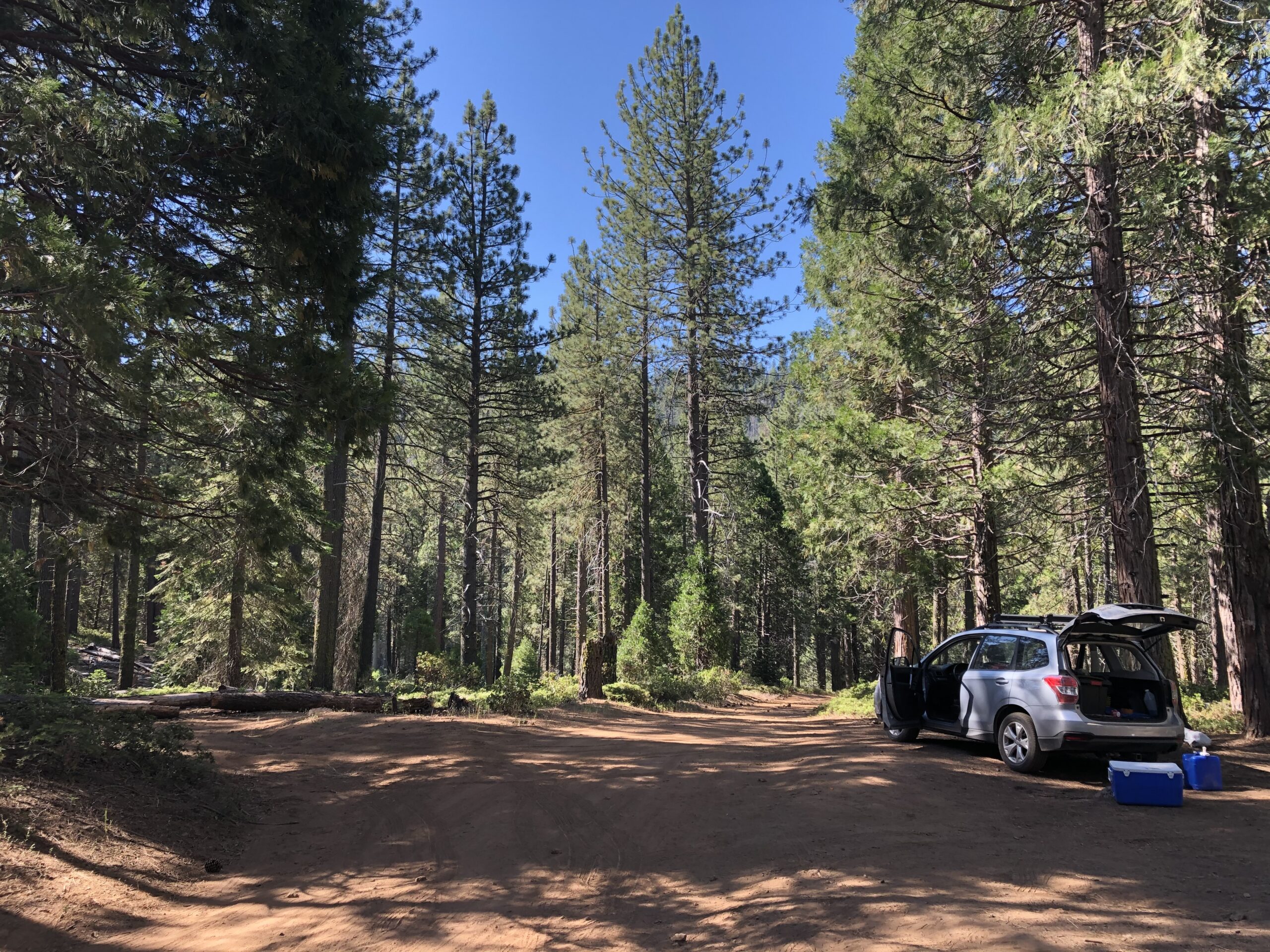
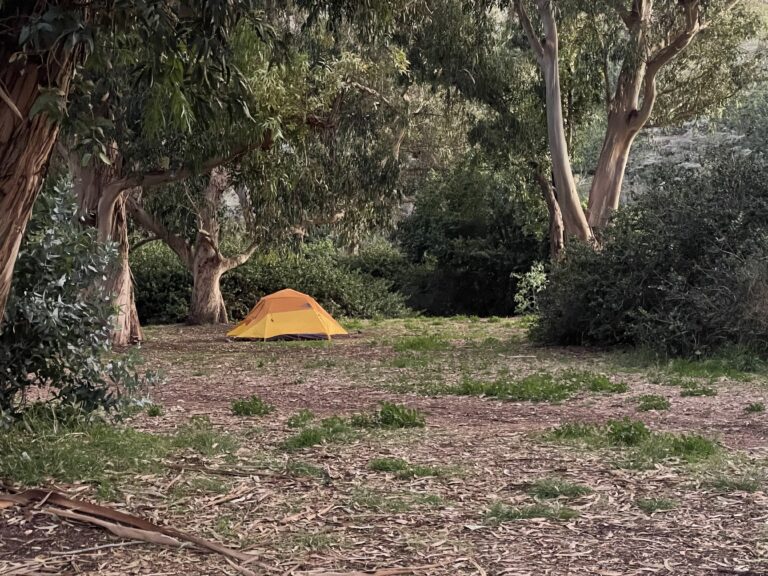
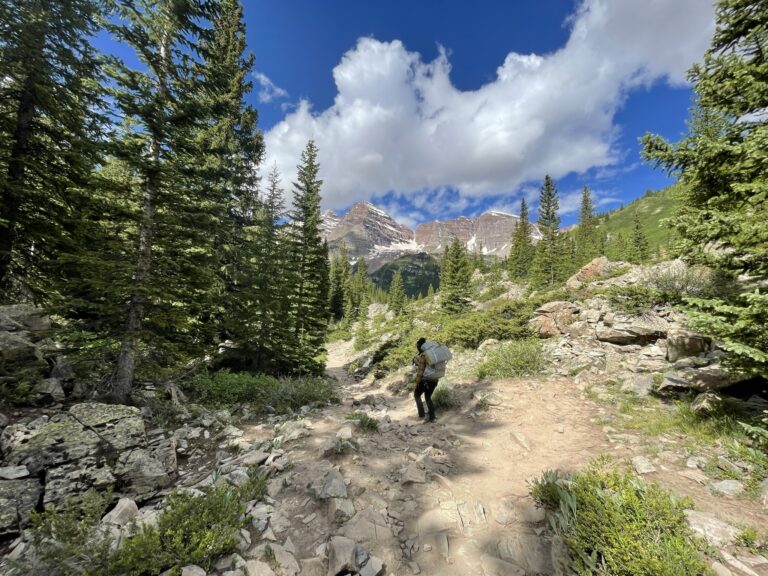
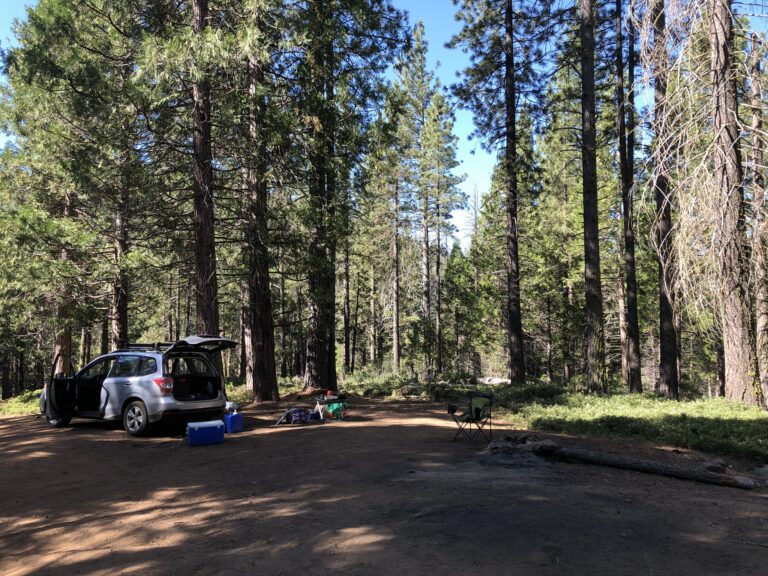
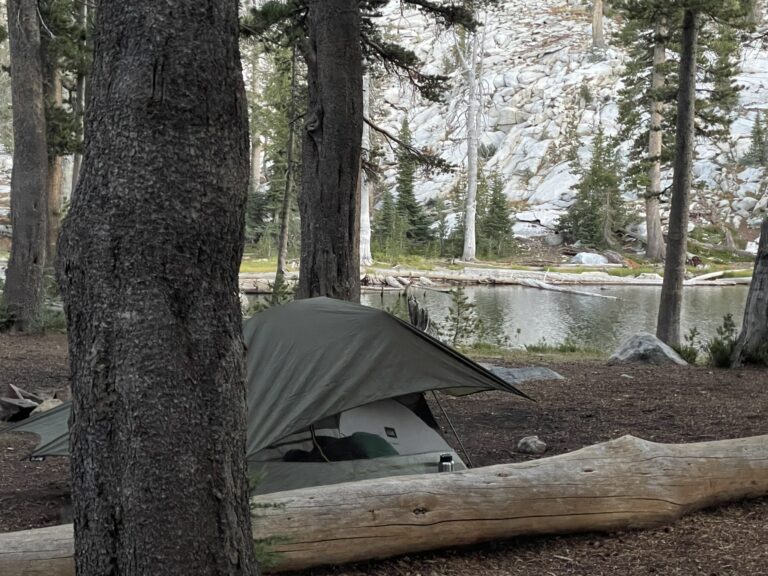
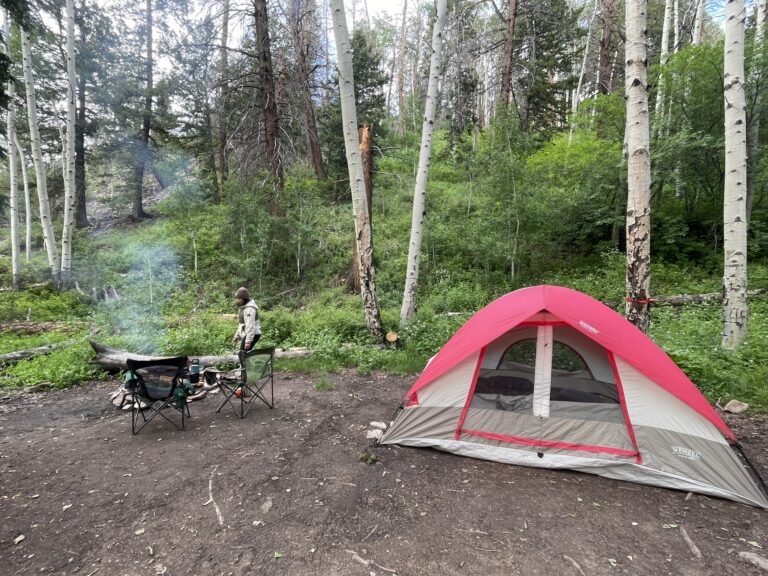
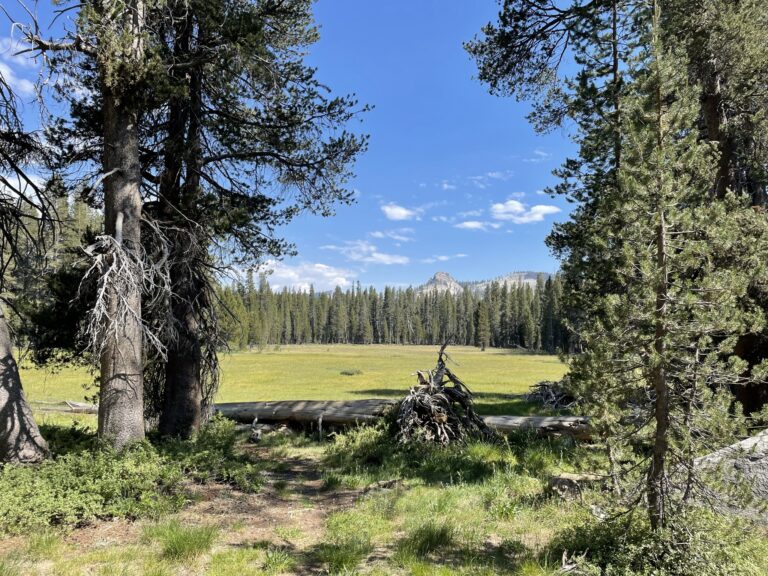
“Dispersed” – any camping on public lands outside of developed areas or campgrounds, no amenities or services. “Car camping” – when youcamp in or near your car, and bring all your gear in your car.
Combine these two and you get “Dispersed car camping,” where you explore public lands via car on different access roads (usually requiring AWD), and find a camping spot all on your own. And one of the best areas for dispersed car camping is our National Forests, which we will review below.
Even with the right tools and experience, finding a good dispersed car camping spot takes some research, patience, and a little trial and error. This guide will help you start in the right place.
Step-By-Step Instructions:
1. Pick a general destination or experience
Where do you want to go? What type of experience do you want to have? This is the whole point, to get out there and explore something new. Do you want to go near the coast? Explore a new state? Be among old-growth forests? Or camp somewhere close to home?
Pick a destination that excites you, and that’s suitable for your experience level.
2. Set some goals for the trip
Settle on the details and general things you want to accomplish during the trip:
How many nights?
How many people?
What time of year?
How far of a drive?
Any specific features or activities?
Near a lake? Going fishing? Camp near trails? Summit a peak? Or just relax?
3. Research What National Forests Are Near Your Destination
First, you need to find National Forests near your destination. Use the resources from the US Forest Service to do a broad search and find one near you.
Quickest ways to find National Forests
USGS Public Lands Maps: Free. This map has filters and layers for each type of public land designation – set the map layer to “National Forests.”
US Forest Service website: Sometimes it’s best to go directly to the source and use the tools on the USFS website and find a National Forest near you.
Once you find the exact National Forest you’ll visit, it’s time to dig deeper and identify the best “Forest Service Roads” for access, and identify potentially suitable camping spots. This is the part of planning that takes a bit more patience and research. Over time, you’ll get better at identifying places and start to create an inventory of favorite spots or camping areas you’ve found on your journey.
Need some inspiration? Check out our detailed guide for the Sierra National Forest, which is an excellent place for dispersed car camping.
4. Identify “Forest Service Roads”
“Forest Service Roads” are public access roads within National Forests that lead to trails and dispersed camping areas. Normally identified on a map with solid lines (a minor route that is usually paved), or double-dashed lines (an unmaintained road, usually requiring AWD). Use any of the following maps:
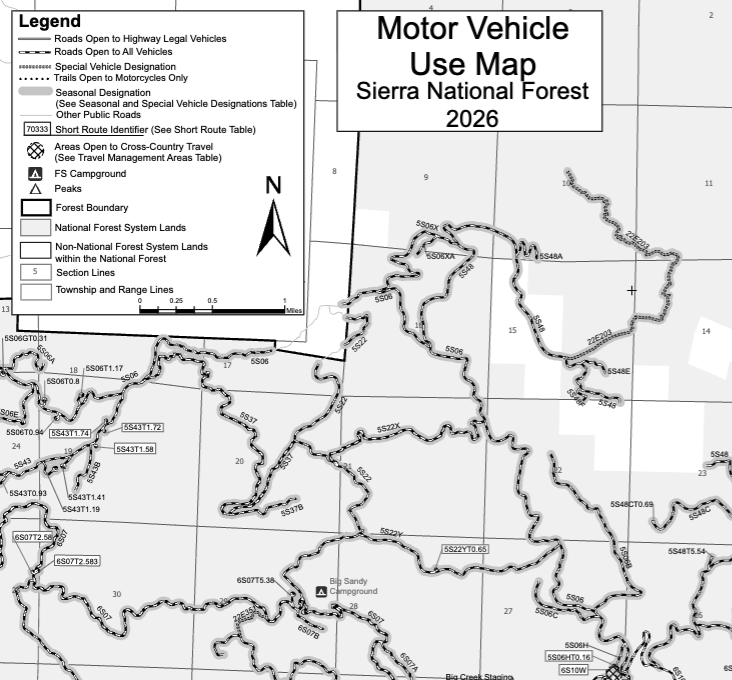
Motor Vehicle Use Maps (MVUM):
Free to the public and the ultimate source of truth for dispersed car camping. This is an official map from the USFS that shows authorized roads, forest boundaries, and private land boundaries in a National Forest.
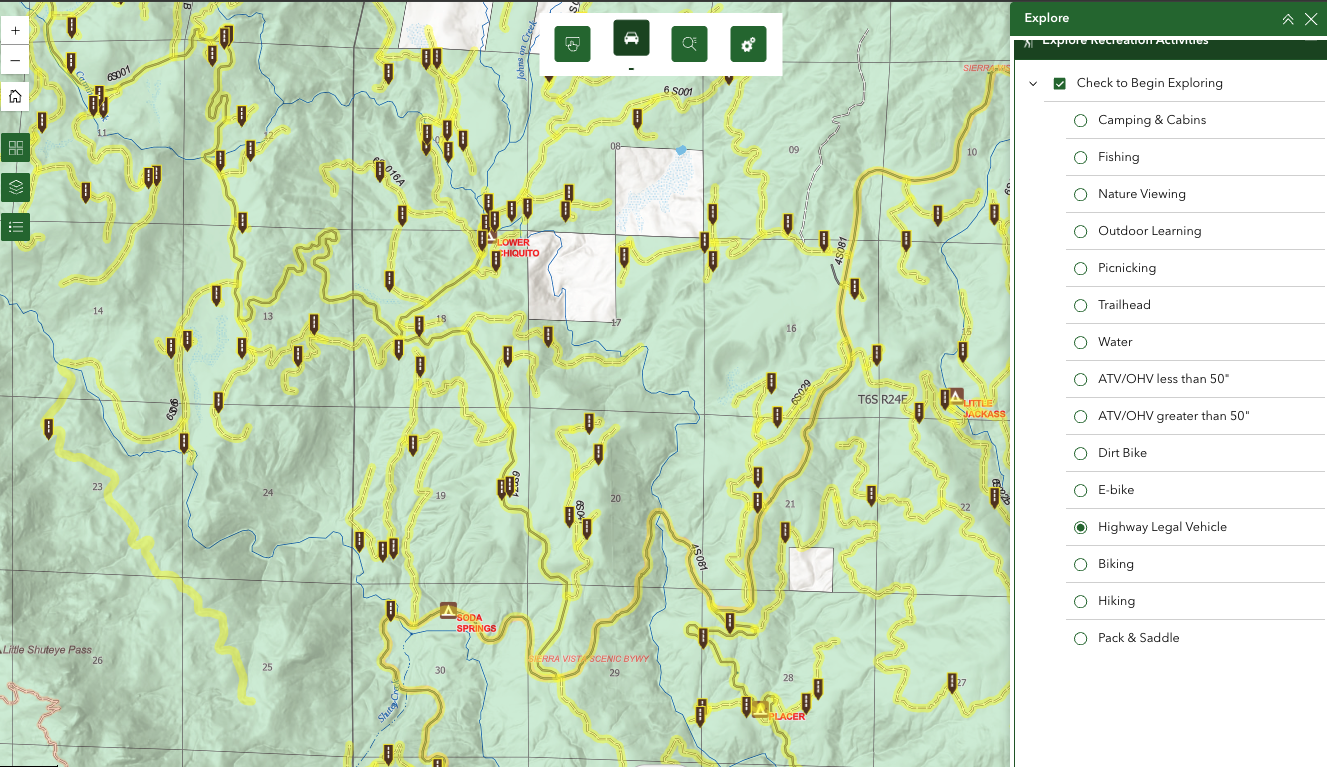
Forest Service Digital Maps:
Free to the public. These are digital, interactive maps of National Forests that show topographical lines, Forest Service Roads, trails, campgrounds, and recreational areas.
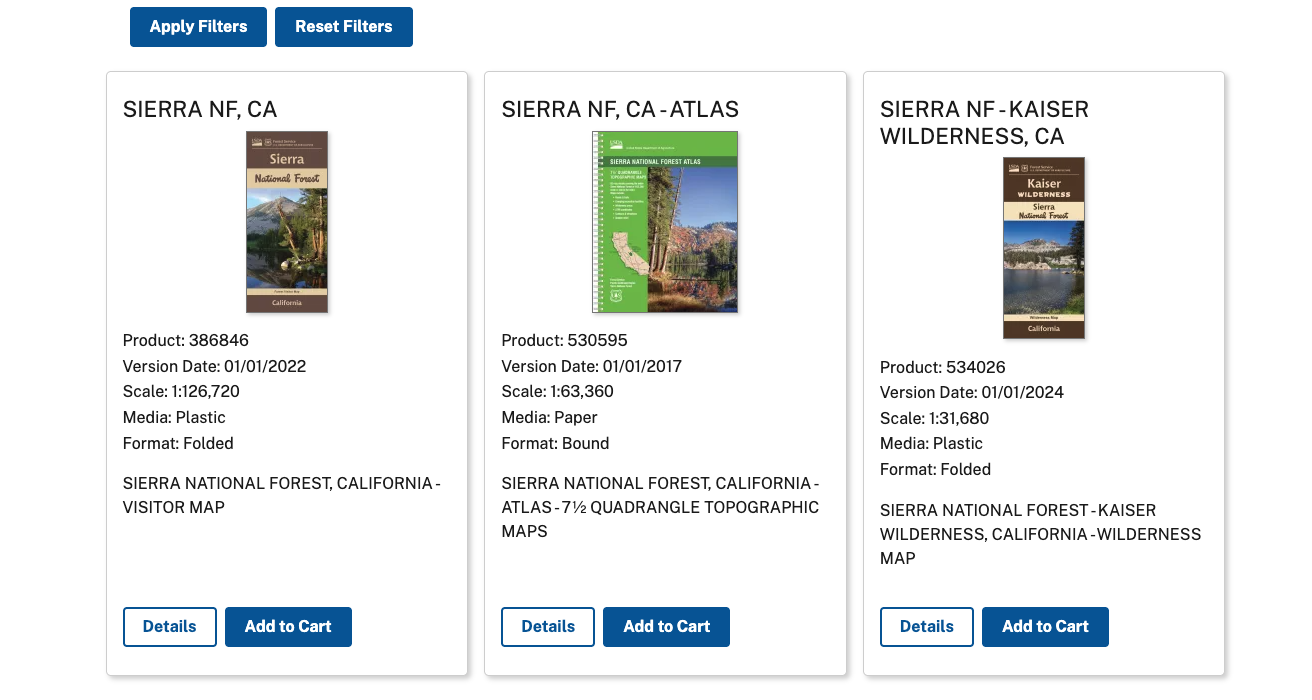
Forest Service Physical Maps:
Available for purchase. Digital is great, but physical maps are a fun and easy way to research roads/access for upcoming trips. Buy them online or at your local camp shop.
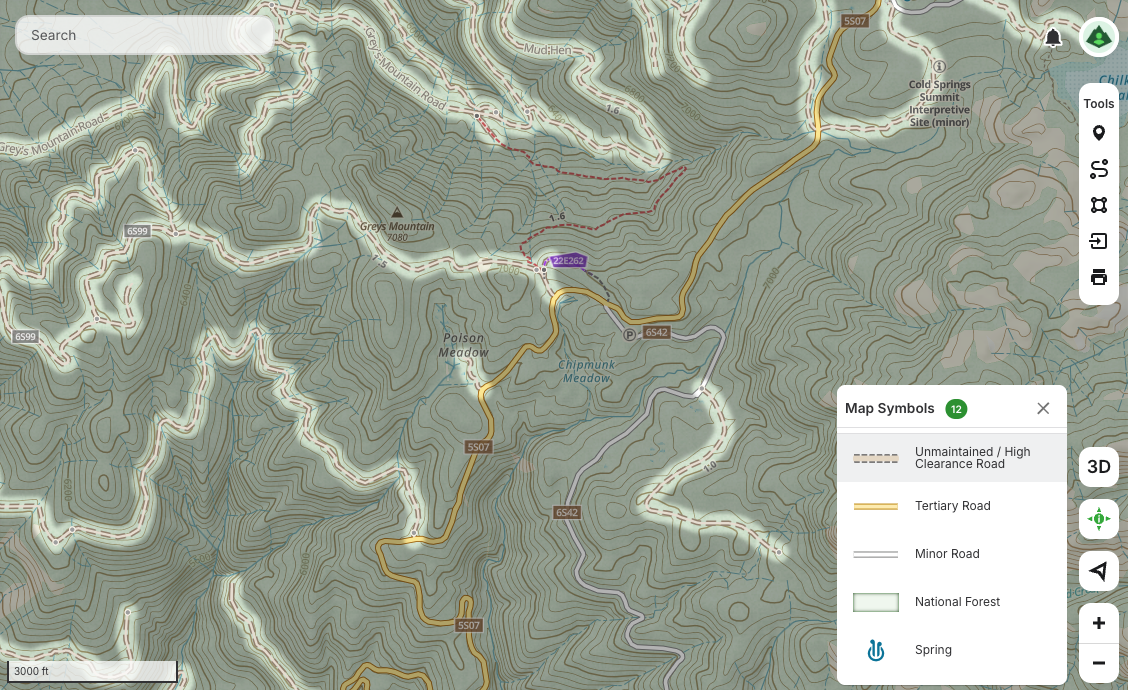
Gaia GPS Digital Maps:
Free version available with paid upgrades. Very user friendly, this map uses data from the USGS, and makes it easy to identify Forest Service Roads, trails, and recreational opportunities on public lands.
USFS Motor Vehicle Use Maps(MVUM)
USFS Digital Maps
USFS Physical Maps
Gaia GPSMaps
5. Identify Camping Spots
Unless otherwise posted, you are allowed to dispersed camp anywhere off of a Forest Service Road. However, just because the area is accessible does not mean it is suitable for camping. This is the most critical realization for dispersed camping – it takes some effort to find the right spots.
Contact the local Ranger District.
An under-appreciated resource, your local Ranger District will hold the best knowledge for identifying dispersed camping areas in the forest. Contact them via email or phone to let them know your route and plans, and they can point out specific areas that are ideal for camping.
Research and mark “target” spots on a map
Only so much can be determined on a map, but it’s good practice to try and identify suitable places to camp on a map. Look at satellite imagery or topographical maps and find areas along the Forest Service Roads that appear to have level ground, clear pull-off areas for your vehicle, and areas that are not on a steep slope or highly exposed. Mark these sites down and use them as targets when driving down the roads.
6. Research Current Alerts, Conditions, And SafetyWarnings
No matter how great of a camp trip you planned, the worst thing you can do is arrive there without having confirmed conditions and alerts for your area. Before your trip, go to the US Forest Service website and check the “Alerts” page for the National Forest you’re visiting to confirm the following:
Road conditions:
Oftentimes roads can be closed due to damage, snow, and repairs. The website will list road closures and planned maintenance.
Trail conditions:
Trails may be closed for maintenance, wildfire or flood damage. This may affect your trip if you plan to go on day-hikes or adventures.
Local weather:
Mountain and wilderness weather is very local, changing dramatically within just a few miles. Always check weather for your exact dates, I recommend the National Weather Service.
Water sources:
Car camping allows you to bring plenty of water. But depending on your goals, you may need to re-supply. Look for water sources on a map, and confirm their availability and reliability with a Ranger.
Wildfires:
This should never be overlooked. Make sure you have a safe evacuation route, and are up-to-date on current fires and areas of risk. Use the “Active Wildfire Map” from American Forests.
Other:
There’s a lot that can happen – bear warnings, flash floods, hail storms, avalanches, rock slides. When in doubt, just contact the local Ranger Station for the National Forest you’re visiting and they can assist.
7. Rules for dispersed car camping
Accessing these forests and camping in them is an incredible privilege we have. But failing to respect the lands and each other is what damages our National Forests, and makes it unsafe and unusable for future generations. Please learn and respect the rules for dispersed car camping:
MVUMs show you exactly where to drive, and not drive. Please protect our National Forests and reduce wildfire risks, and do not go off-roading unless it’s explicitly allowed.
Car must be parked off the road:
When you find a spot, your car must be parked off the road and cannot block any access. Do not drive into areas with no roads to park your car. Find a suitable spot, of which there are plenty.
Camp at a distance:
You must camp at least 200 feet from all lakes, rivers, water sources, trails, roads, or nearby developed areas.
Pack it in, pack it out:
There is never trash service in the National Forests when dispersed camping. Every single thing you bring in, you must bring out – trash, food, gear, human waste. No exceptions.
Human waste disposal:
For pooping, digging a cat-hole can work if done properly (you still need to pack out your used TP, see instructions here), but space continues to be more limited and many still ignore protocol, which is why I encourage using a WAG bag. Today, many backcountry areas require them. Buy some at your local camping shop, and learn how to use it next time nature calls.
Respect wildlife:
Do not ever feed, approach, or disturb any wildlife.
Respect other campers:
We are all here for different reasons, so please be respectful to other campers, and be mindful of any noise, lights, and space you’re occupying.
Minimize campfire impacts:
Before you make campfires, please confirm whether they are allowed in your area. If allowed, check for permits, and try to use existing fire rings or areas before making a new one. Fires must be completely extinguished and cold to the touch.
14-day camping limit in most National Forests:
Most National Forests restrict camping in one area to 14 days, after which you must vacate the area and find somewhere else. For most of us, 14 days is more than we’ll need.
8. Enjoy the trip – the rest is up to you!
Now that you’ve planned out your trip, the rest is up to you for packing, preparing supplies, and making it all come together.
Public lands in the United States exist because people chose long-term care over short-term gain. Lands that had been previously stewarded for generations by Indigenous nations. That protection is never guaranteed. It depends on laws, funding, leadership, and public attention.
Unfortunately, recent federal decisions continue to weaken protections and increase pressure from extractive use and private enterprises. This puts ecosystems, natural resources, wildlife, cultural sites, historical sites, gateway towns, local and national economy, and public access at major risk.
If you appreciate public lands and the benefits they provide to all of us, please help support them through action and conversation.