
Camping Guide: Anza-Borrego Desert State Park
Largest state park in California with remote camping, ancient history, and bizarre landscapes.
In this Guide:
About
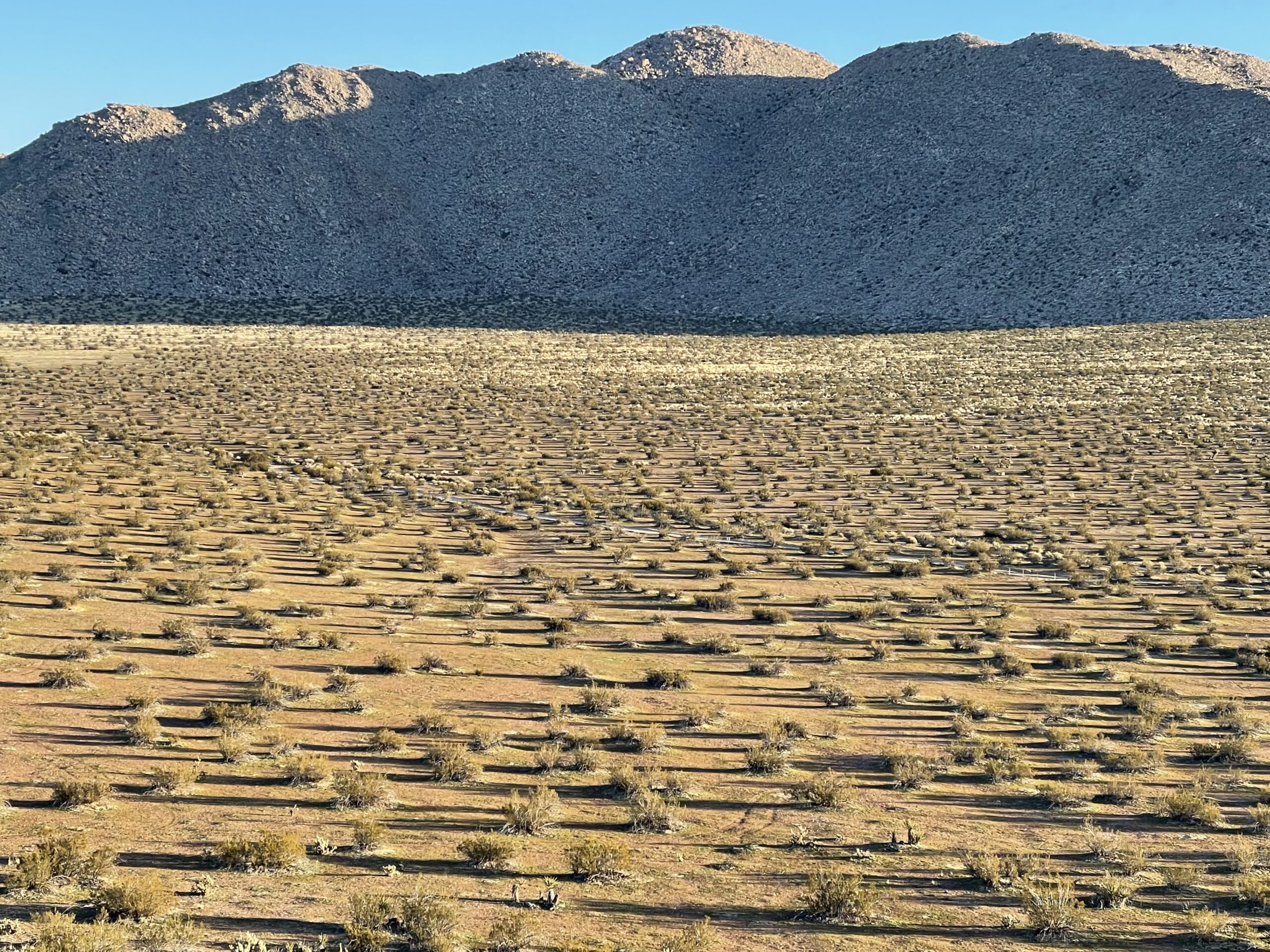
Larger than Rhode Island, this park’s diversity of landscapes, wildlife, history, and camping is hard to rival. For all campers, you should not dismiss the desert. Dry? Yes. A bit bleak? Sure. Devoid of life and awesome things to see and do? Not even close. Tall mud canyons, 6-million-year-old ancient sea fossils, sweeping valleys and badlands, and unbelievable vistas, wildlife and culture await you at this state park.
It is a unique opportunity for those who want something more out of their trip to Southern California.
Curious about Wilderness Areas in general? Read more about How To Camp In Wilderness Areas.
Details For Visiting
How To Get There
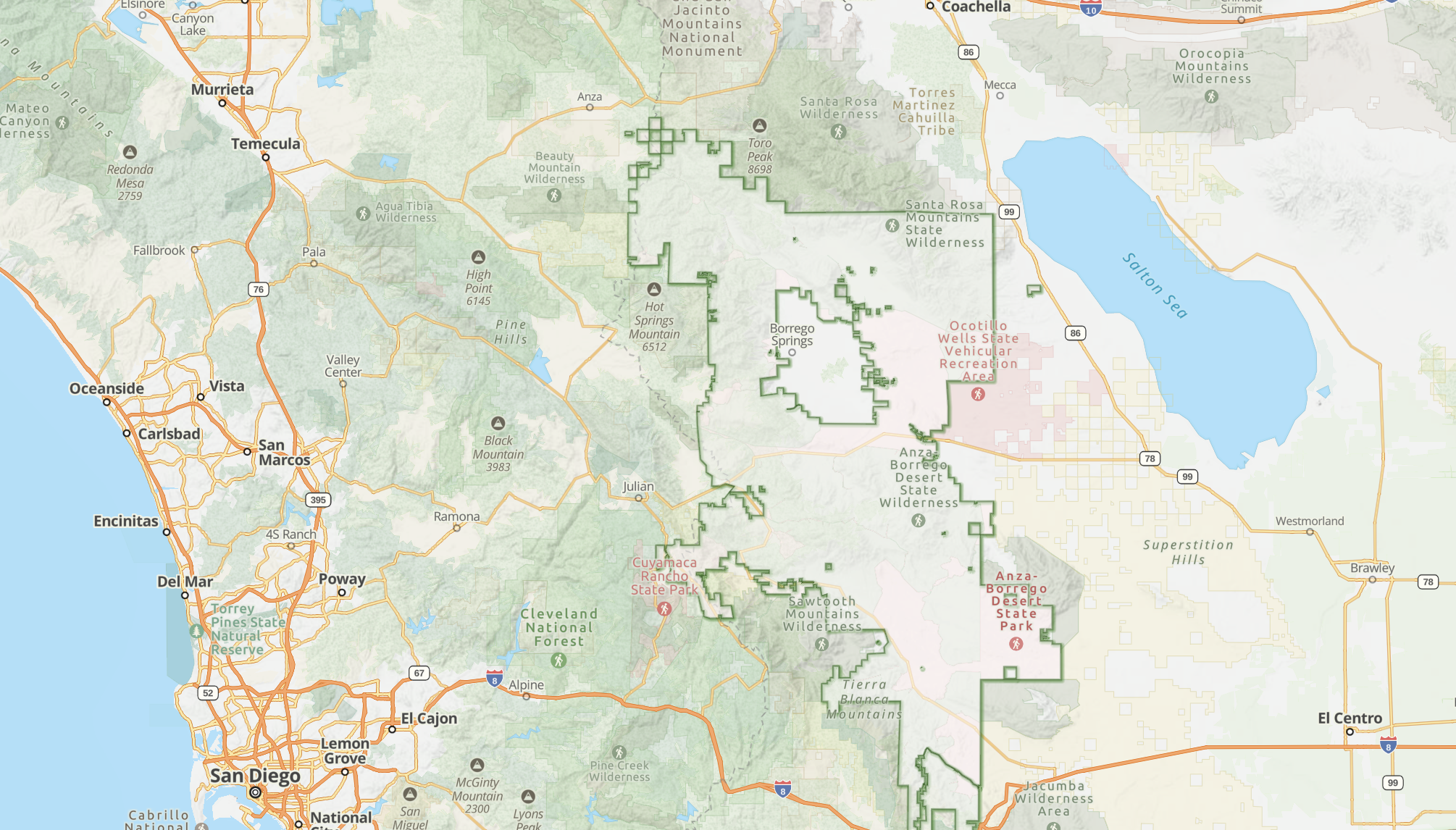
Below are some of the nearest towns surrounding the park.
Ocotillo, CA – access to the southern parts of the park:
Just over 1 hour east of San Diego, this brings you directly to Sweeney Pass Road, one of the main routes in the park. Ocotillo is a small, unincorporated town with a gas station/supply shop (recommended to use before driving in the park), and a couple of tiny dining options like the Lazy Lizard Saloon.
Borrego Springs, CA – access to the central parts of the park:
The heart of Anza-Borrego, this is a true desert community. Eclectic, artistic, and charming, it’s the perfect place to visit as part of your trip to the park. Famous for its strong art community and metal sculptures, you’ll also find dining and refuel options.
Julian, CA – access to the northern parts of the park:
A small town with an old western aesthetic, it’s a key stop along another main route into the park. Up in the Cuyamaca/Volcan Mountains area, this town is famous for its homemade pies and apple orchards. Plenty of places to refuel, stock up, and eat some grub before you descend down into the desert below.
When To Visit
Spring: Early spring is the very end of the season in Anza-Borrego due to the high temperatures approaching. It is also one of the most popular times to visit due to the desert flower blooms, assuming the area has had a strong rainy season.
Summer: The park is open, but it’s just too hot. Daytime temperatures easily exceed 100 degrees, and nighttime rarely gets below the 80s. It’s dangerous, challenging, and simply not recommended.
Fall: Early fall is usually a bit too hot still. But mid to late fall is the beginning of the best season in Anza-Borrego. With tolerable daytime temperatures and great nighttime temperatures, this is when hiking and camping starts to peak in the park. Expect more crowds, more booked sites, and more everything.
Winter: The perfect time to visit. Ideal daytime temperatures, and nice chilly nighttime temperatures. As such, it’s the most popular time for visitors and outdoor recreation in the park. This is also the beginning of the rainy season, so while it’s the best time to explore, rain can bring dangerous flash floods. Be weather aware, even in the cool temperatures.
Points Of Interest
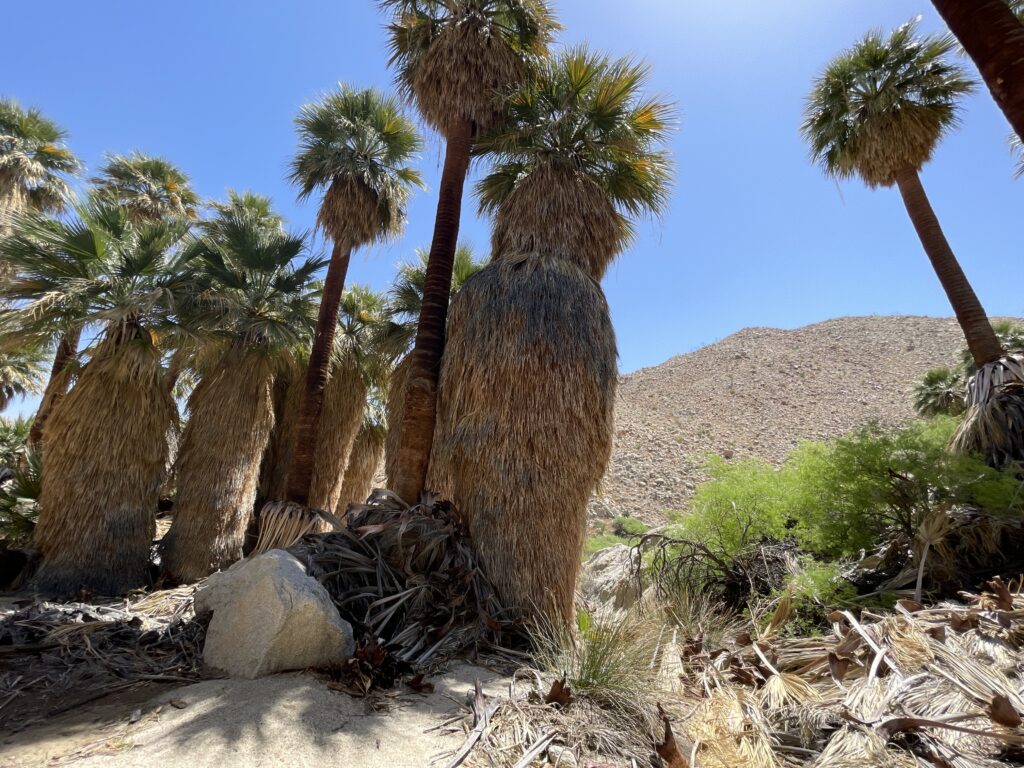
Oases: A desert without an oasis is…still a desert. But it’s great when you can find them, like in Anza-Borrego. Several popular trails and hiking areas contain lush pockets of palm trees and running water from natural springs (usually during the wetter, colder months), such as the Borrego Palm Canyon Trail, and the Mountain Palm Springs trail.
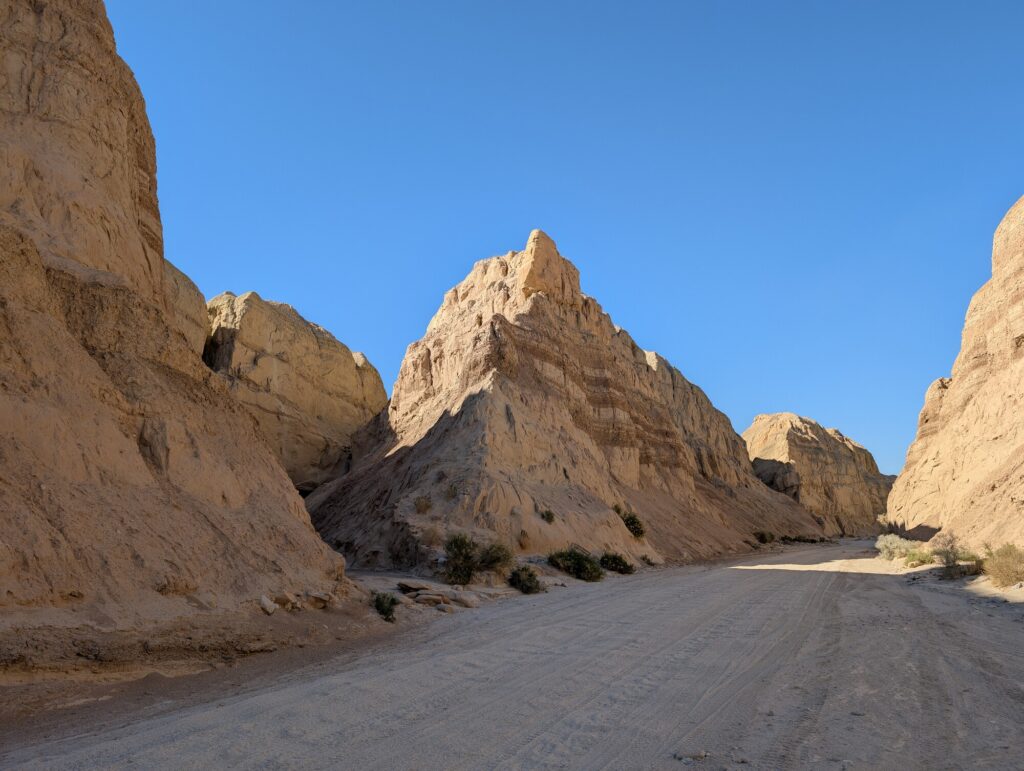
Mud canyons: One of the most intriguing features throughout the park is the tall, narrow mud canyons. These were formed from rain and floods washing away the layers of sediment and debris that built up over millions of years, deposited by rivers and seabeds. These are a popular attraction for both off-roaders, and hikers. Despite their beauty, these are extremely unstable and can collapse at a moment’s notice. Do not wander off or climb into unknown areas.
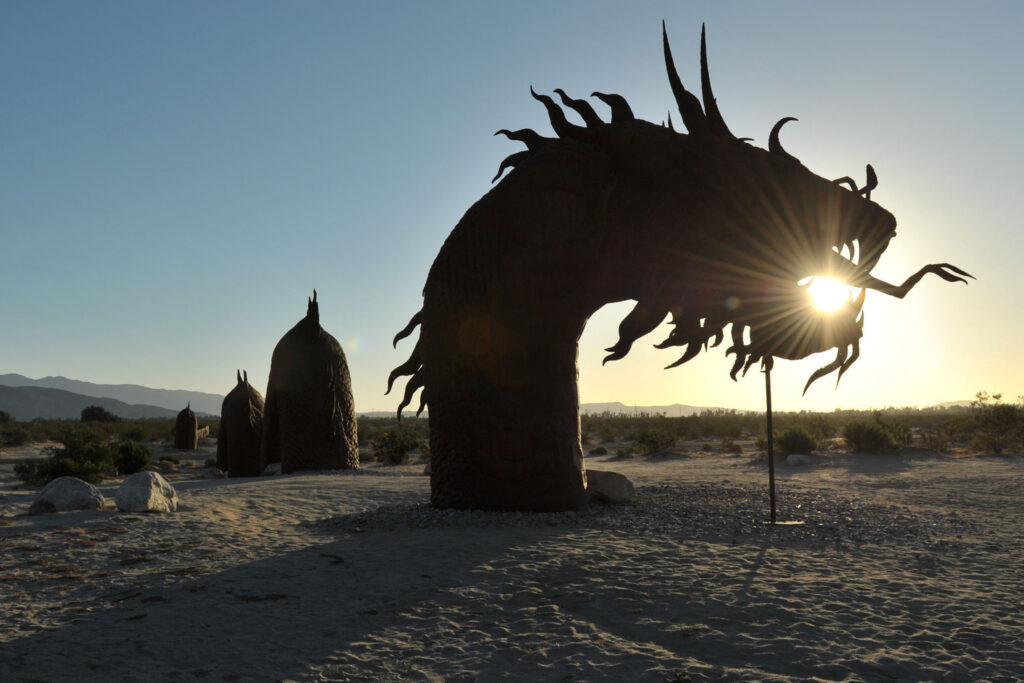
Sculpture gardens: They go hard with art in Borrego Springs, CA, and this is best seen through their metal sculpture gardens. Dragons, robots, dinosaurs, fantastical creatures, the local residents provide a unique spectacle of rusted, metal art that fits perfectly against the mountainous, arid backdrop of Anza-Borrego.
Camping Etiquette
Regardless of where you camp on our public lands, it’s important to learn, practice, and share proper camping etiquette. Some key items include:
- Understand the Leave No Trace principles.
- Do not ever feed, approach, or disturb any wildlife.
- Be respectful to other campers (noise, lights, space).
- Unless you have access to trash facilities, please pack everything out (including poop and TP).
- Leave the place better than you found it.
- Please try to use already established camping areas instead of creating your own.
Because it is such a unique and sensitive environment, desert camping does require some additional practices, including:
- Ground fires are illegal. All campfires must be kept inside a camp stove or in a metal container provided by the camper with a bottom and sides.
- Do not step or drive on the crunchy soil.
For more info, please read our article on Camping Etiquette For Beginners.
Types Of Camping Allowed
Just about every type of camping is allowed in Anza-Borrego Desert State Park, from backcountry camping on remote trails, to car camping on many of the dusty desert roads.
Backpacking:
Where you travel only by foot and carry all your gear, food, and supplies in a backpack. For a full guide on backpacking, read our Backpacking Basics article.
Car camping:
Driving up to a camping area and packing your gear in a car. This can be at a developed campground, primitive campground, or on your own as dispersed camping. Ultimately, anywhere you camp with your car is “car camping.” For a full guide on car camping, read our Car Camping Basics article.
No OHVs (Off Highway Vehicles) are allowed in Anza-Borrego Desert State Park.
Where You Can Camp In Anza-Borrego
All adventure seekers will be satisfied with the many camping options available in the park, whether you want something with more amenities, or a full backcountry experience.
Dispersed Camping:
Dispersed camping (sometimes called “wild camping” or “backcountry camping” ) is any camping on public lands outside of developed areas or campgrounds. No facilities, no campground host, and no fire rings. Just you and mother nature.
Where you can dispersed camp:
- Provided there is no signage or bans stating otherwise, you can dispersed camp virtually anywhere that is accessible in Anza-Borrego Desert State Park.
- For dispersed camping via backpacking you can explore the trails in the park.
- For dispersed camping via car camping, travel along the 500 miles of dirt roads.
- There are also opportunities for dispersed camping through mountain biking, and animal packing.
General rules:
- When dispersed camping, you must camp at least 200 feet away from trails, water sources, and other campers.
- Use existing camp spots instead of creating new ones, where possible.
- Please respect any signs prohibiting camping in specific areas. This is to protect sensitive areas and prevent overuse.
- Camping is limited to a total of thirty (30) days in any calendar year.
- Drones are prohibited.
Fees:
- None.
- Dispersed camping is free here.
Group size:
- No strict limit for dispersed camping specifically, however most camping groups in Anza-Borrego are limited to a maximum of 8 people.
Reservations:
- None.
- Dispersed camping is first-come, first-served.
Permits/passes:
- None are required for dispersed camping.
Campfires:
- Ground fires are illegal in the desert.
- Campfires must be kept inside a camp stove or in a metal container provided by the camper with a bottom and sides. I use a galvanized trash can.
- A free California Campfire Permit is required.
Water:
- Generally speaking, there are no reliable water sources (do not rely on natural springs).
- You must bring in all of your own water, for car camping or backpacking.
Pets:
- Pets are NOT allowed in the backcountry areas of Anza-Borrego.
Cutting trails/switchbacks:
- Making shortcuts on trails is prohibited. Going off trail causes severe and lasting damage including erosion, habitat destruction, increased flood risks, increased safety risks for people, and costly maintenance.
Alerts:
- Before any trip, always check the current conditions and alerts for the area.
Additional Resources:
- Contact the park directly for information on current conditions, recommendations, or details about the area. The rangers are happy to help and are a great resource to help plan your camping trips.
- Visitor Center: 760-767-4205
- Park Office: 760-767-5311
- District Office: 760-767-4037
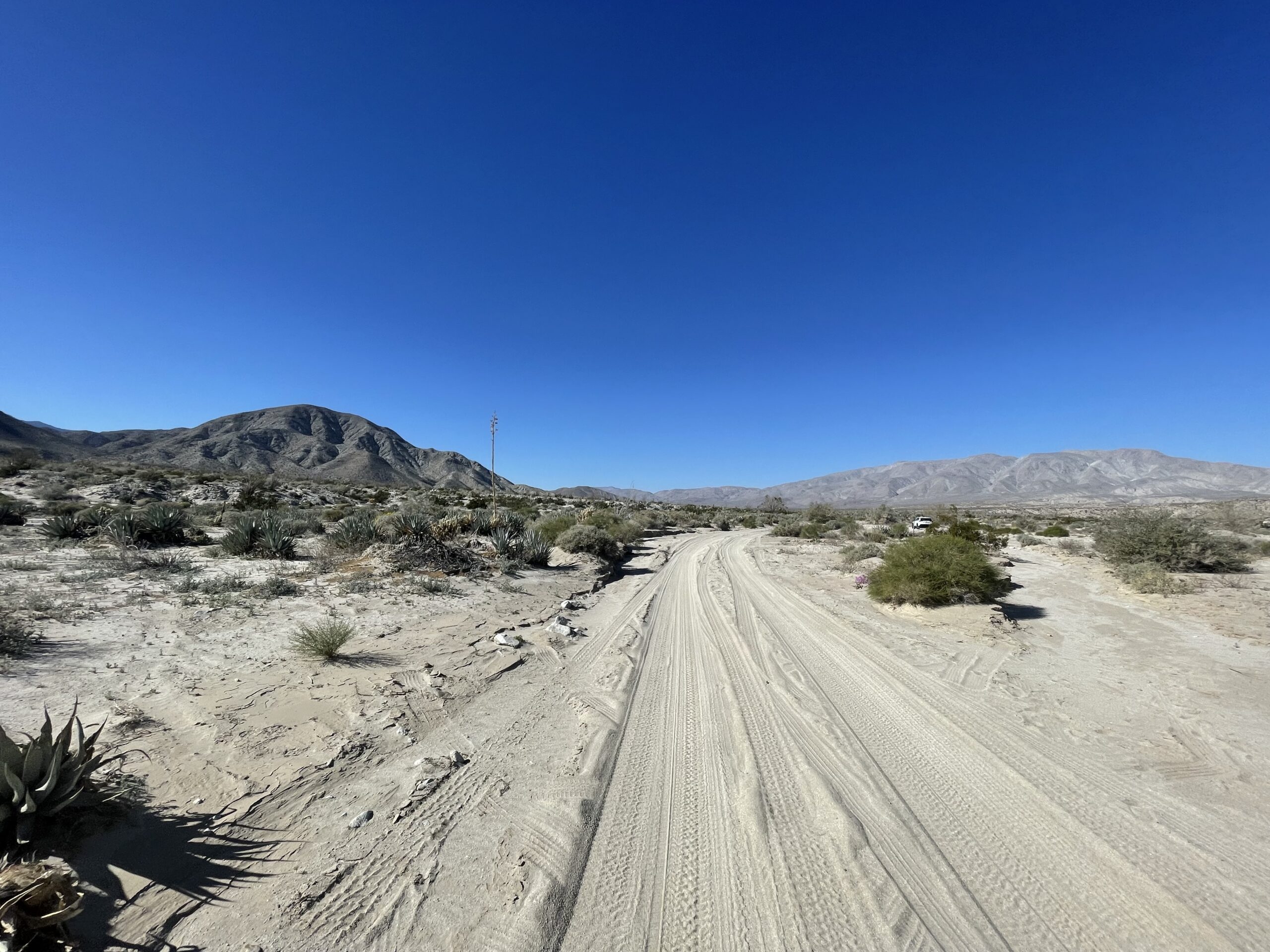
Primitive Campsites:
A “primitive campsite ” is a designated camping area with little to no amenities, is typically first-come first-served, and usually just provides a place to set up your tent. You may get lucky with a fire ring, but these campgrounds are mainly to provide safe areas for people to camp in more remote places and to help protect the landscape and wildlife by preventing excessive dispersed camping.
Number of primitive campsites:
- 7 primitive campsites are available in Anza-Borrego Desert State Park.
- Fish Creek
- Mountain Palm Springs
- Sheep Canyon
- Culp Valley
- Yaqui Well
- Blair Valley
- Arroyo Salado
General rules:
- Please adhere to the campgrounds’ established rules.
- Please be respectful of other campers and be mindful of your noise (especially music), the brightness of your lights, and the space you occupy.
- Only bring or buy local firewood, which helps prevent tree-killing pests from damaging the local flora. Visit firewood.ca.gov for more info.
- Please leave the place better than you found it.
- Camping is limited to a total of thirty (30) days in any calendar year.
- Drones are prohibited.
Fees:
- Two primitive campsites require a fee. Visit the home page for the park and expand the “Anza-Borrego Desert State Park Fee Schedule” for more details.
- Fish Creek Campsite
- Mountain Palm Springs Campsite
- The others are free:
- Sheep Canyon
- Culp Valley
- Yaqui Well
- Blair Valley
- Arroyo Salado
Group size:
- Campsites are limited to a maximum of 8 people.
Reservations:
- First-come, first-served. No reservations available.
Permits/passes:
- None are required for these sites.
Campfires:
- Ground fires are illegal in the desert.
- Campfires must be kept inside a camp stove or in a metal container provided by the camper with a bottom and sides. I use a galvanized trash can.
- A free California Campfire Permit is required.
Water:
- Generally speaking, there are no reliable natural water sources.
- You must bring in all of your own water, for car camping or backpacking.
Pets:
- Pets are only allowed in campgrounds (no backcountry areas).
- Pets must be on a leash less than 6 feet in length at all times, and may not be left unattended or outside at night.
- Cholla cacti and other harsh desert plants are everywhere out here, which can easily injure your pets.
Alerts:
- Before any trip, always check the Anza-Borrego State Park home page for the current conditions and alerts.
Additional resources:
- Contact the park directly for information on current conditions, recommendations, or details about the area. The rangers are happy to help and are a great resource to help plan your camping trips.
- Visitor Center: 760-767-4205
- Park Office: 760-767-5311
- District Office: 760-767-4037
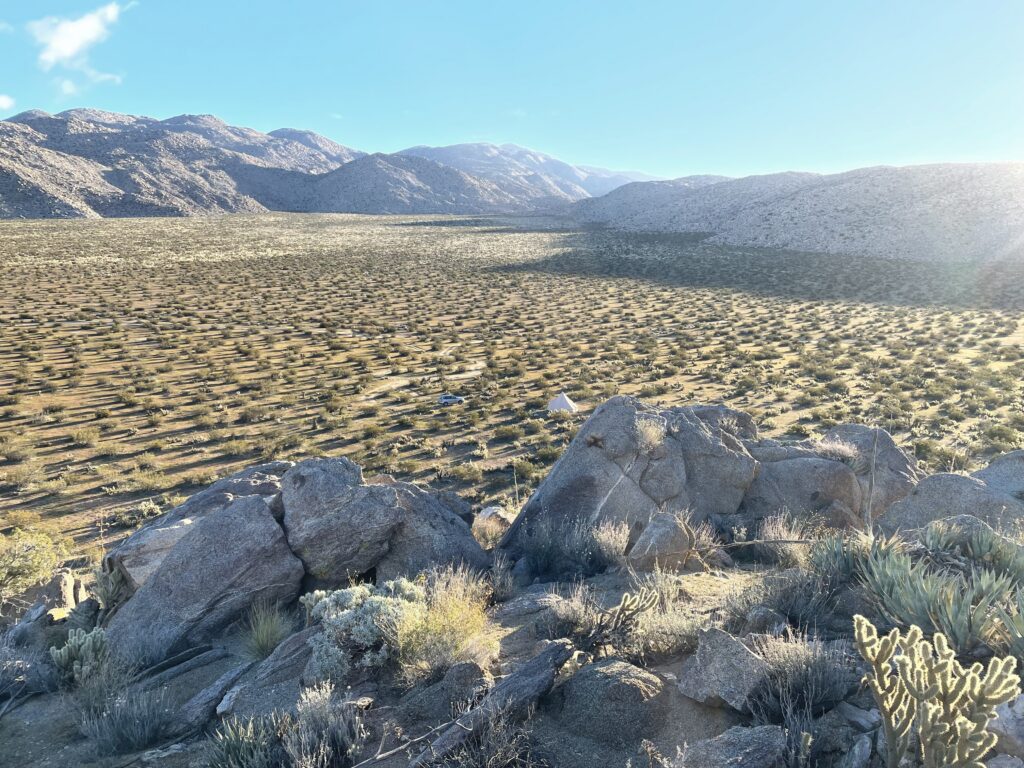
Developed Campgrounds:
A “developed campground” comes with basic amenities and facilities, usually including fire rings, vault toilets (no water or flushing), tent platforms, potable water spigots, firewood for sale, and picnic tables. Oftentimes a campground host will be present to answer questions and collect fees.
Number of developed campgrounds:
- 4 developed campgrounds are available in Anza-Borrego Desert State Park.
- Vern Whitaker Campground
- Borrego Palm Canyon Campground
- Tamarisk Grove Campground
- Bow Willow Campground
General rules:
- Please adhere to the campgrounds’ established rules.
- Please be respectful of other campers and be mindful of your noise (especially music), the brightness of your lights, and the space you occupy.
- Only bring or buy local firewood, which helps prevent tree-killing pests from damaging the local flora. Visit firewood.ca.gov for more info.
- Please leave the place better than you found it.
- Camping is limited to a total of thirty (30) days in any calendar year.
- Drones are prohibited.
Fees:
- All developed campgrounds charge a fee, which can vary.
- Visit the home page for the park and expand the “Anza-Borrego Desert State Park Fee Schedule” for more details.
Group size:
- Campsites are limited to a maximum of 8 people.
Reservations:
- Go to reservecalifornia.com to make reservations for campgrounds in Anza-Borrego.
- Bow Willow Campground is paid on site.
Permits/passes:
- None are required for these campgrounds.
Campfires:
- Ground fires are illegal in the desert.
- Campfires must be kept inside a camp stove or in a metal container provided by the camper with a bottom and sides.
- Developed campgrounds will provide a metal camp stove/ring.
- A free California Campfire Permit is required.
Water:
- You should bring in your own water for all drinking and camping needs.
- Non-potable water stations are sometimes available at developed campgrounds (though not guaranteed).
- Generally speaking, there are no reliable natural water sources.
Pets:
- Pets are only allowed in campgrounds (no backcountry areas).
- Pets must be on a leash less than 6 feet in length at all times, and may not be left unattended or outside at night.
- Cholla cacti and other harsh desert plants are everywhere out here, which can easily injure your pets.
Alerts:
- Before any trip, always check the Anza-Borrego State Park home page for the current conditions and alerts.
Additional resources:
- Contact the park directly for information on current conditions, recommendations, or details about the area. The rangers are happy to help and are a great resource to help plan your camping trips.
- Visitor Center: 760-767-4205
- Park Office: 760-767-5311
- District Office: 760-767-4037
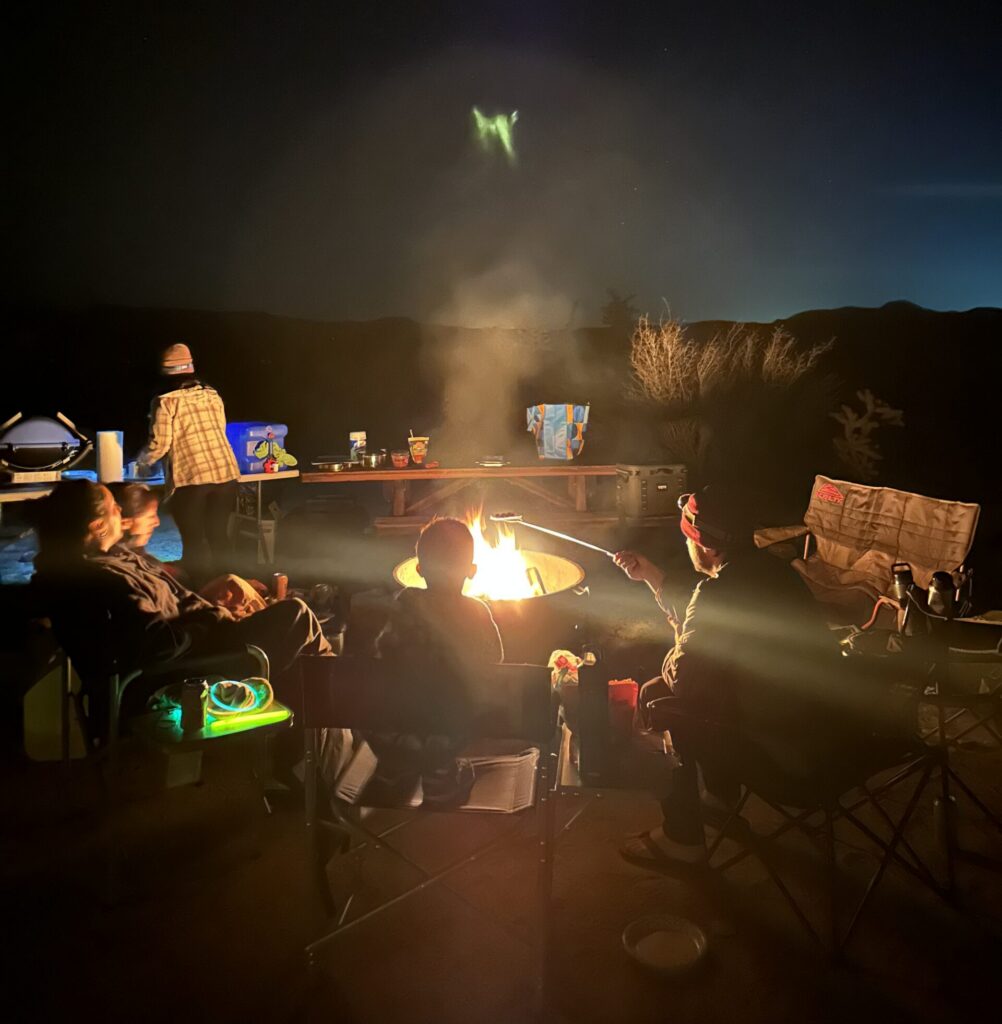
Maps And Navigation
Physical Maps:
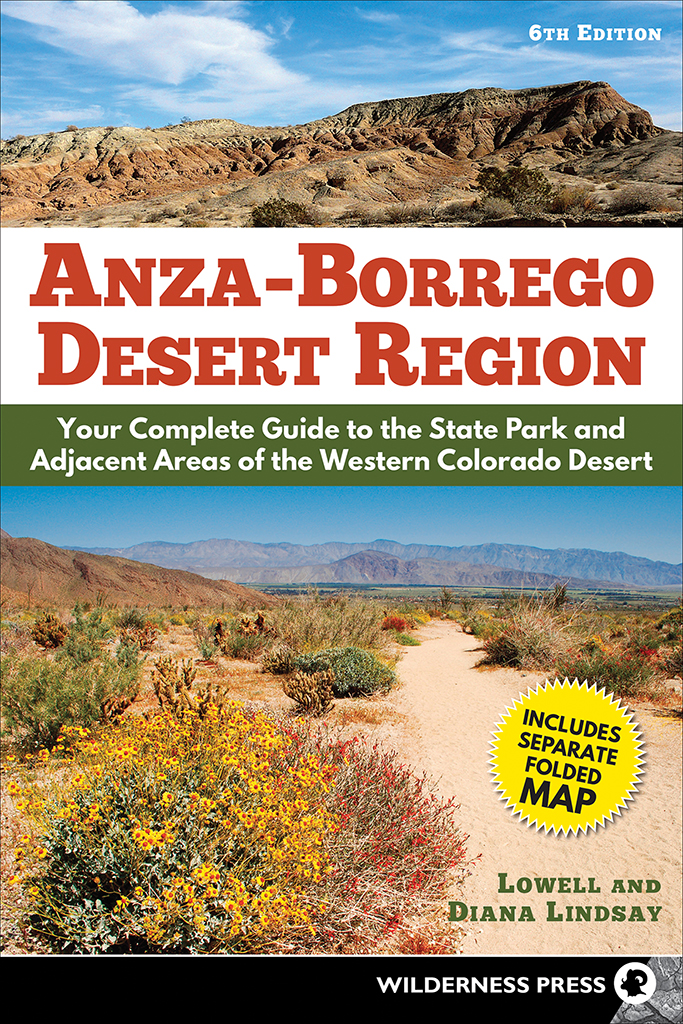
Always carry a physical/topographical map issued from the managing agency or a reputable service, along with a compass. Here are some suggested physical maps to purchase for Anza-Borrego Desert State Park:
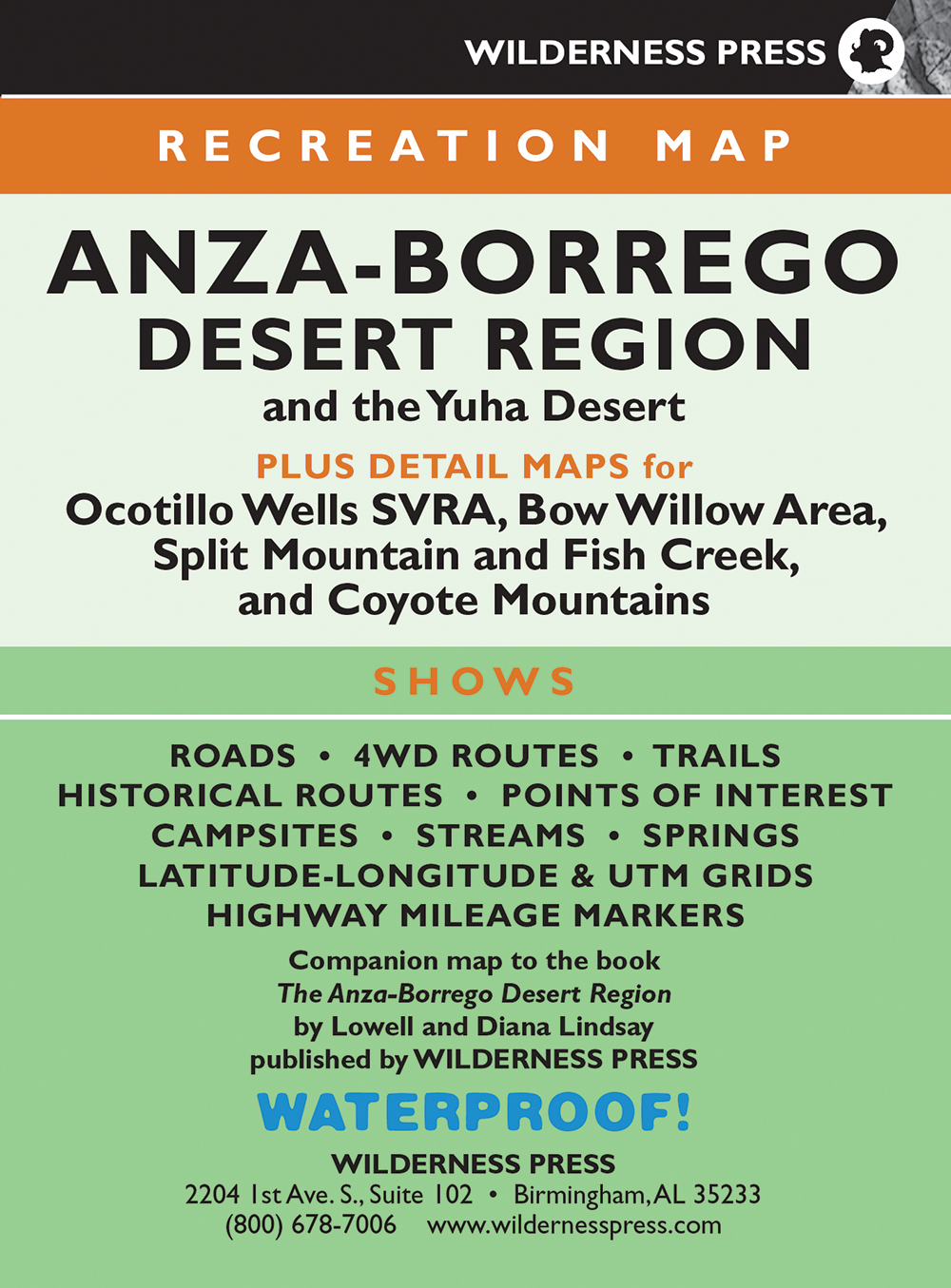
Digital Maps:
You should only use digital apps or tools that include government-issued topographical layers such as from California State Parks and USGS to ensure accurate information. Here are some suggested digital maps and tools for Anza-Borrego Desert State Park:
- Gaia GPS – Anza-Borrego Desert State Park
- Interactive Map from the US Geological Survey
- PDF map from California State Parks – Anza-Borrego Desert State Park
- Interactive Map from California State Parks (shown below)
Safety tips for navigation:
It is great to see apps encouraging outdoor exploration, but please be cautious (or avoid) using crowd-sourced hiking and camping apps. They often lead to trails and routes that do not exist, cut through sensitive habitat, or lead to off-limits and dangerous areas. This puts wildlife, ecosystems, hikers, and rescue teams at risk.
Instead, use maps and information that are sourced directly from the managing agency of the area. If you need help, just contact the local ranger district and they will be happy to provide resources.
How To Plan A Trip Here (Quick Review)
- Confirm your goals for the trip:
- How many nights?
- How many people?
- How many miles?
- What time of year?
- Specific destination or activities (get to a lake? fishing? summit a peak?)
- Use local maps and navigational resources:
- See the “Maps and Navigation” section above to do your research.
- Choose WHAT TYPE of camping:
- Backpacking
- Car camping
- Choose WHERE you’ll camp:
- Developed campground
- Primitive campsite
- Dispersed camping
- Depending on the type of camping and where, determine the following logistical details:
- Getting there: Find out what roads you can take, the trailhead location, and parking availability.
- How you’ll secure your campsite: Do you need reservations, permits, or passes? See the above section, “Where you can camp,” for additional details.
- Distance: What is the driving distance, or hiking distance (or both)?
- Trail/route details: What type of trail (out and back, loop, point-to-point), total elevation gain.
- Terrain: Is the area in a canyon, valley, plateau, wash, are there water crossings, exposed areas, rough roads that require AWD?
- Water sources: In this case, bring your own water and plenty of it. It is unlikely you will have access to reliable fresh water sources in Anza-Borrego.
- Backups: Consider having one or two backup routes or trails in mind.
- Know the local rules:
- See the above section, “Where you can camp,” for additional details on group size, fire restrictions, pets, and other local rules.
- Contact the local ranger stations or visit the Anza-Borrego State Park home page for the current conditions and alerts.
- Road conditions: Oftentimes roads can be closed due to damage, snow, and repairs. Confirm before you leave for your trip, and have alternative routes in mind.
- Trail conditions: Trails may be closed for maintenance, wildfire or flood damage. This may affect your trip if you plan to go on day hikes or adventures, or if you are backpacking.
- Local weather: Mountain and wilderness weather is very local, changing dramatically within just a few miles. Always check weather for your exact dates. I recommend the National Weather Service.
- Water sources: As stated earlier, you should confirm water sources and their availability/reliability with a ranger.
- Wildfires: This should never be overlooked. Make sure you have a safe evacuation route, and are up-to-date on current fires and areas of risk. Use the “Calfire” map to view active wildfires.
- Other: There’s a lot that can happen – animal encounters, flash floods, rock slides, extreme heat. When in doubt, just call the local ranger district for up-to-date information.
- Enjoy the trip – the rest is up to you!
- Now that you’ve planned out your trip, the rest is up to you for packing, preparing supplies, and making it all come together.
- Check out other camping resources to help you with your trip, including “Camping Gear For Beginners” and “An Intro To Public Lands.”
The Natural World
Fauna
The desert is quite alive with resilient creatures, from large mammals to thorny reptiles.
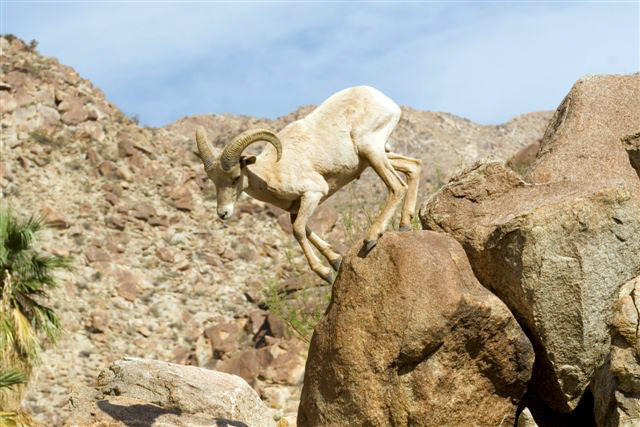
Bighorn Sheep
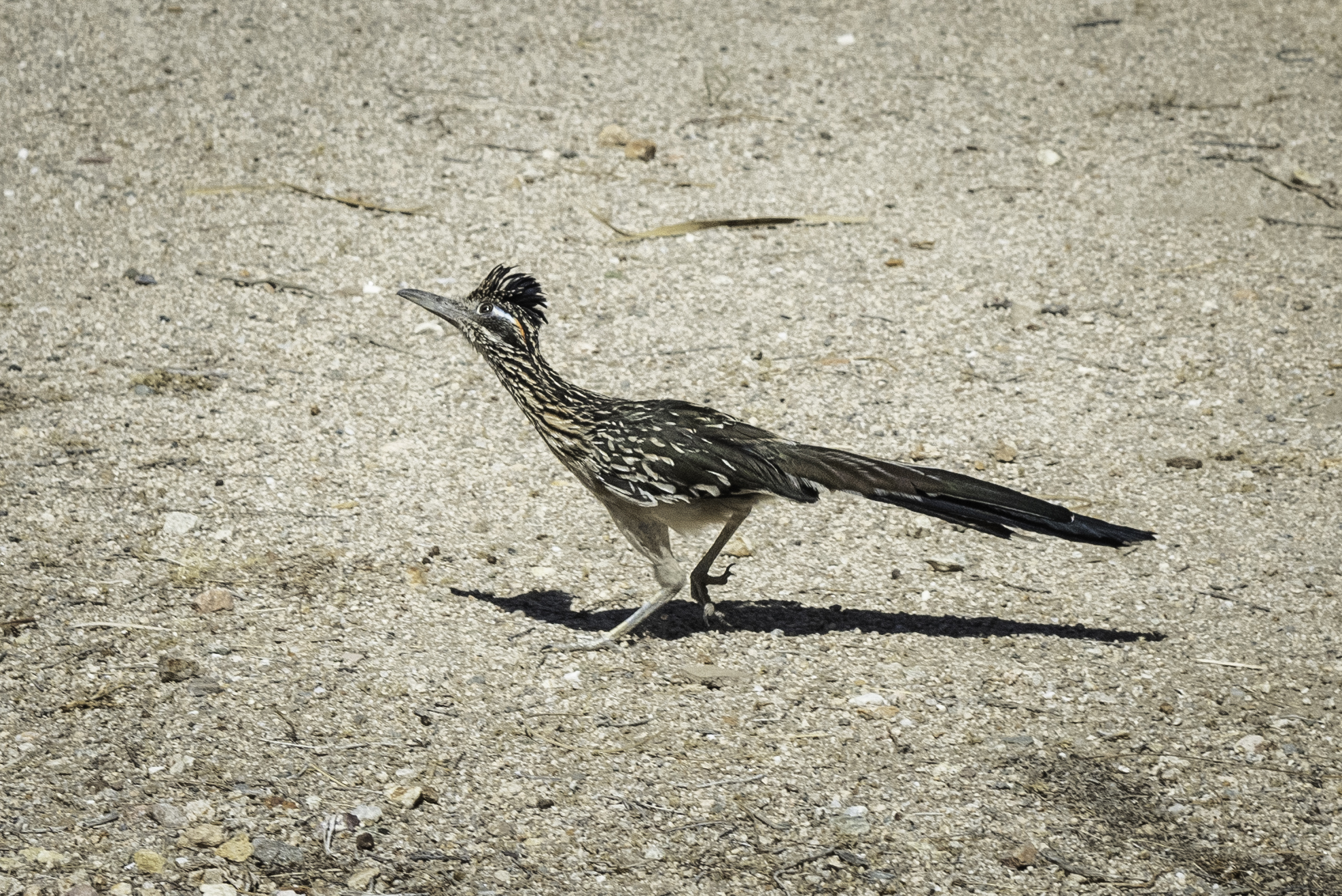
Roadrunner
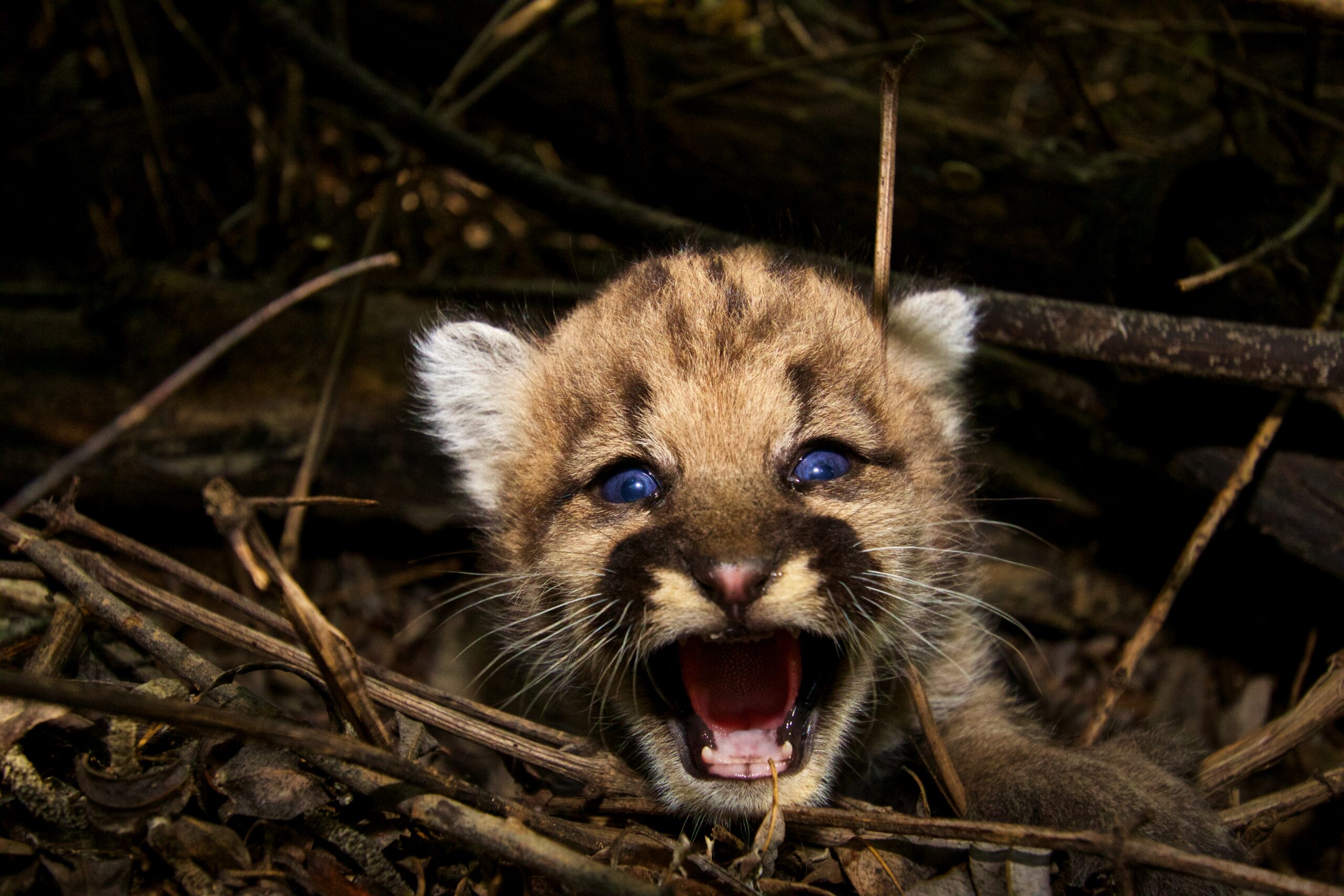
Mountain Lion
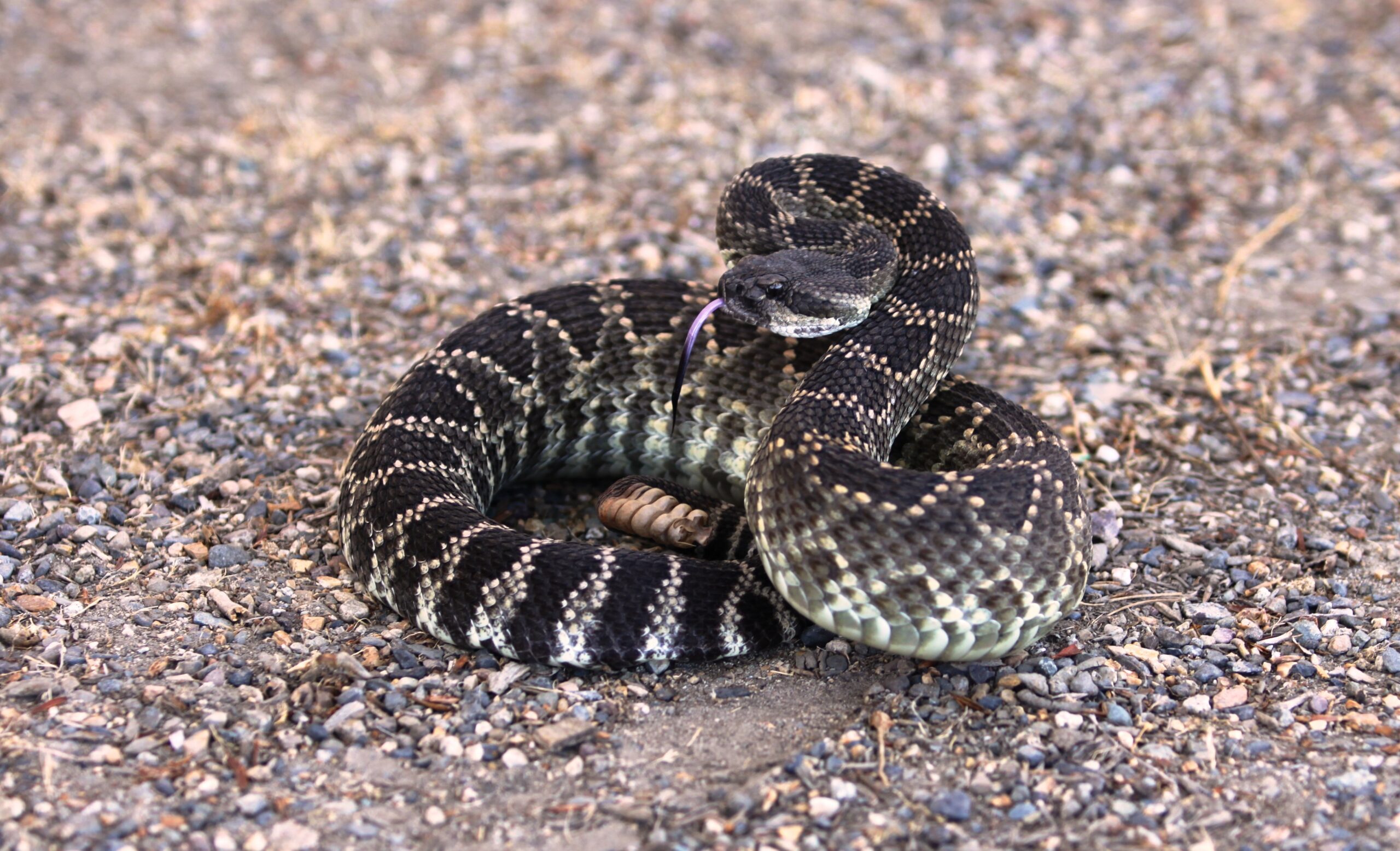
Southern Pacific Rattlesnake
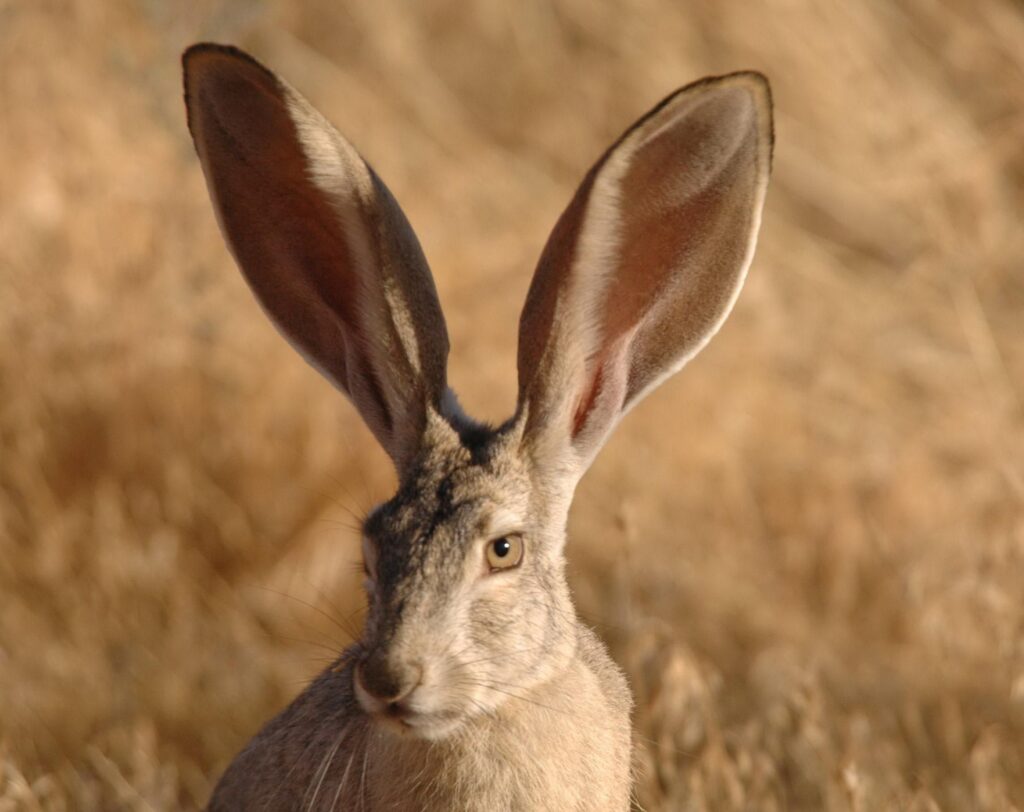
Black-Tailed Jackrabbit
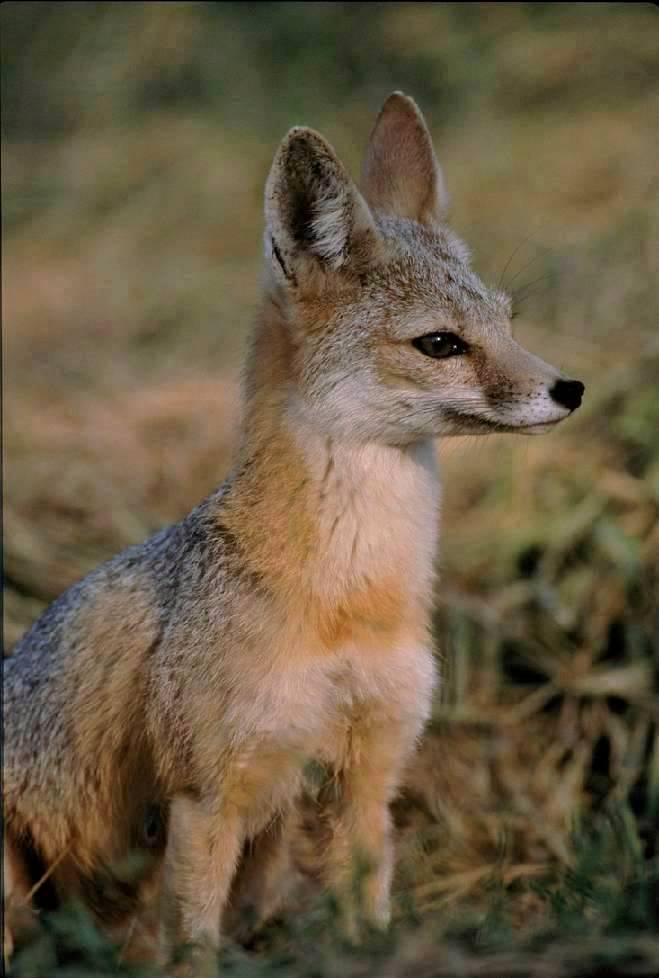
Desert Kit Fox
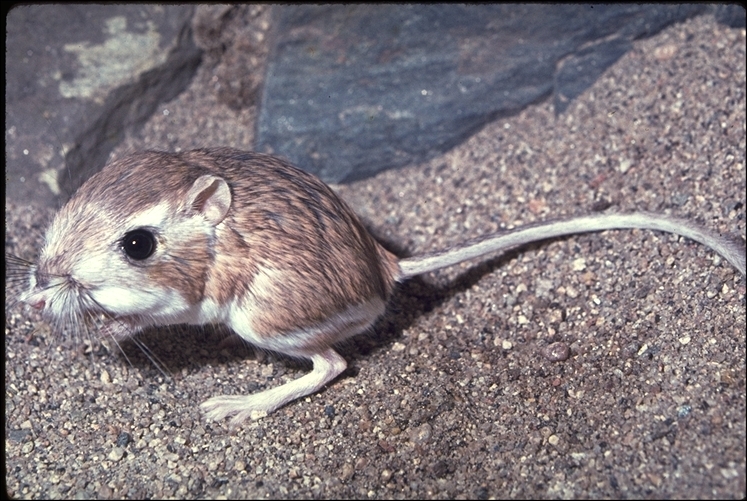
Kangaroo Rat
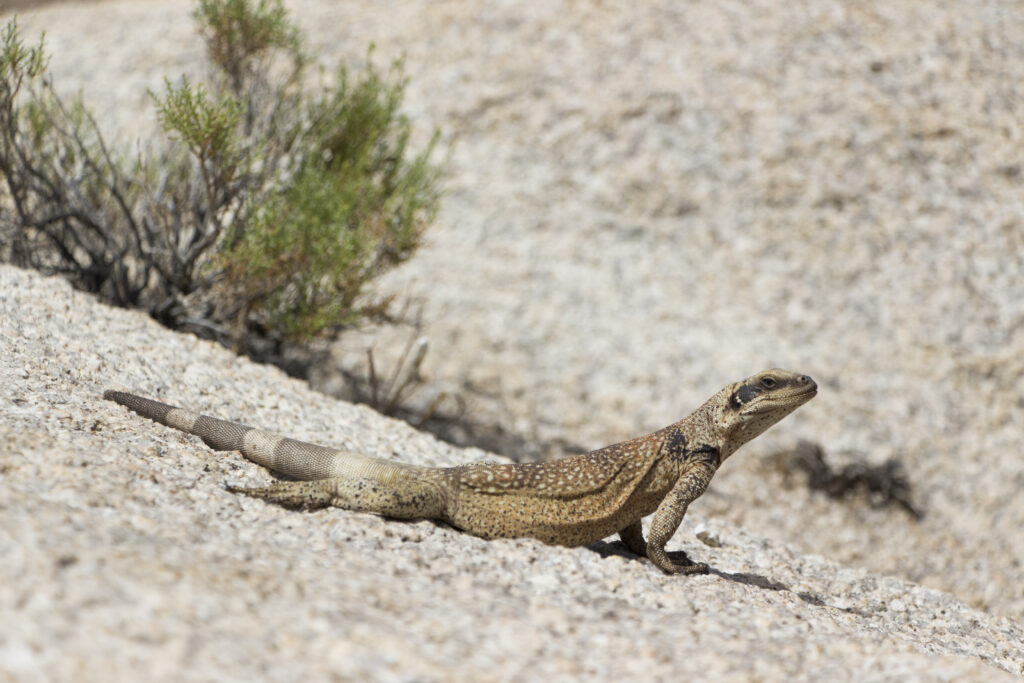
Chuckwalla

Burrowing Owls
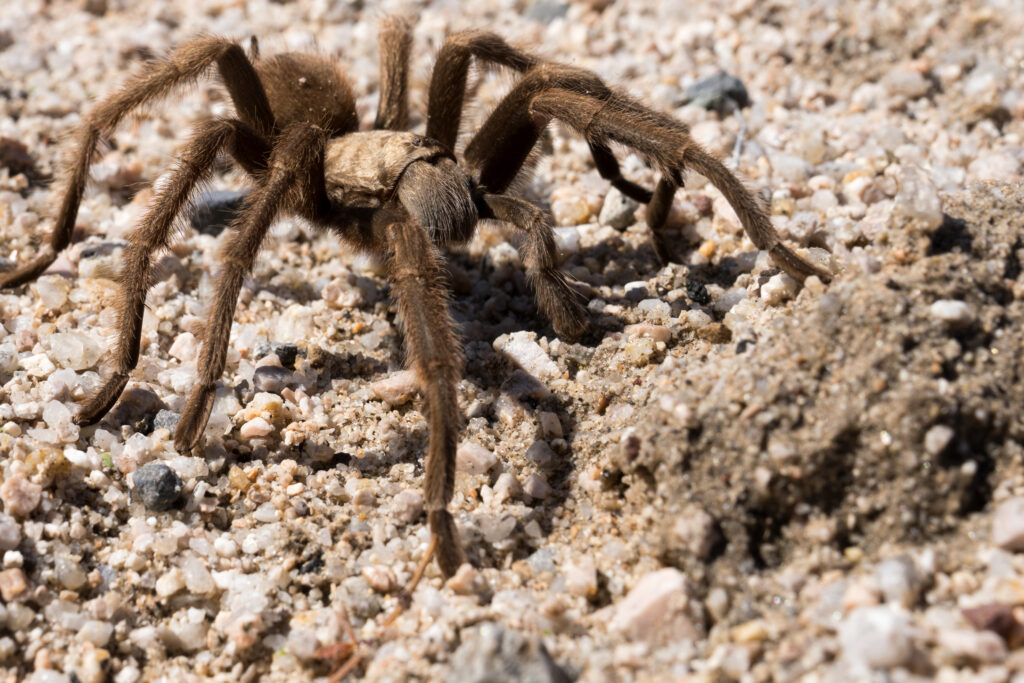
Tarantula
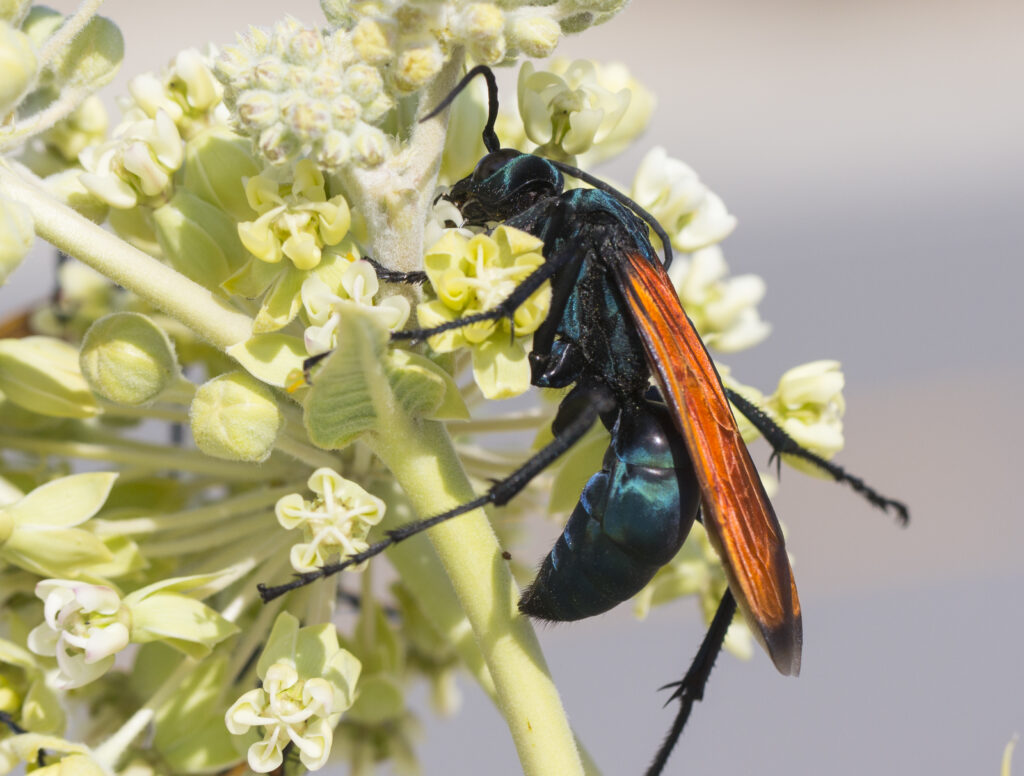
Tarantula Hawk Wasp
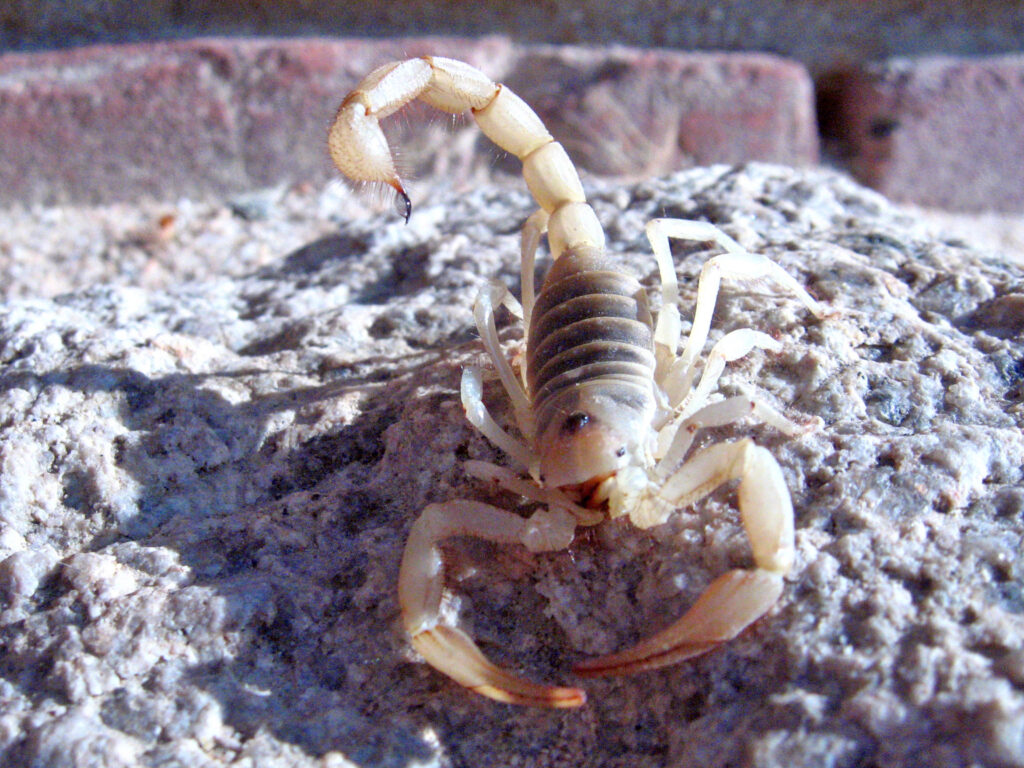
Giant Hairy Scorpion
Flora
Despite its arid conditions, the desert is full of vibrant life that survives in these harsh conditions.
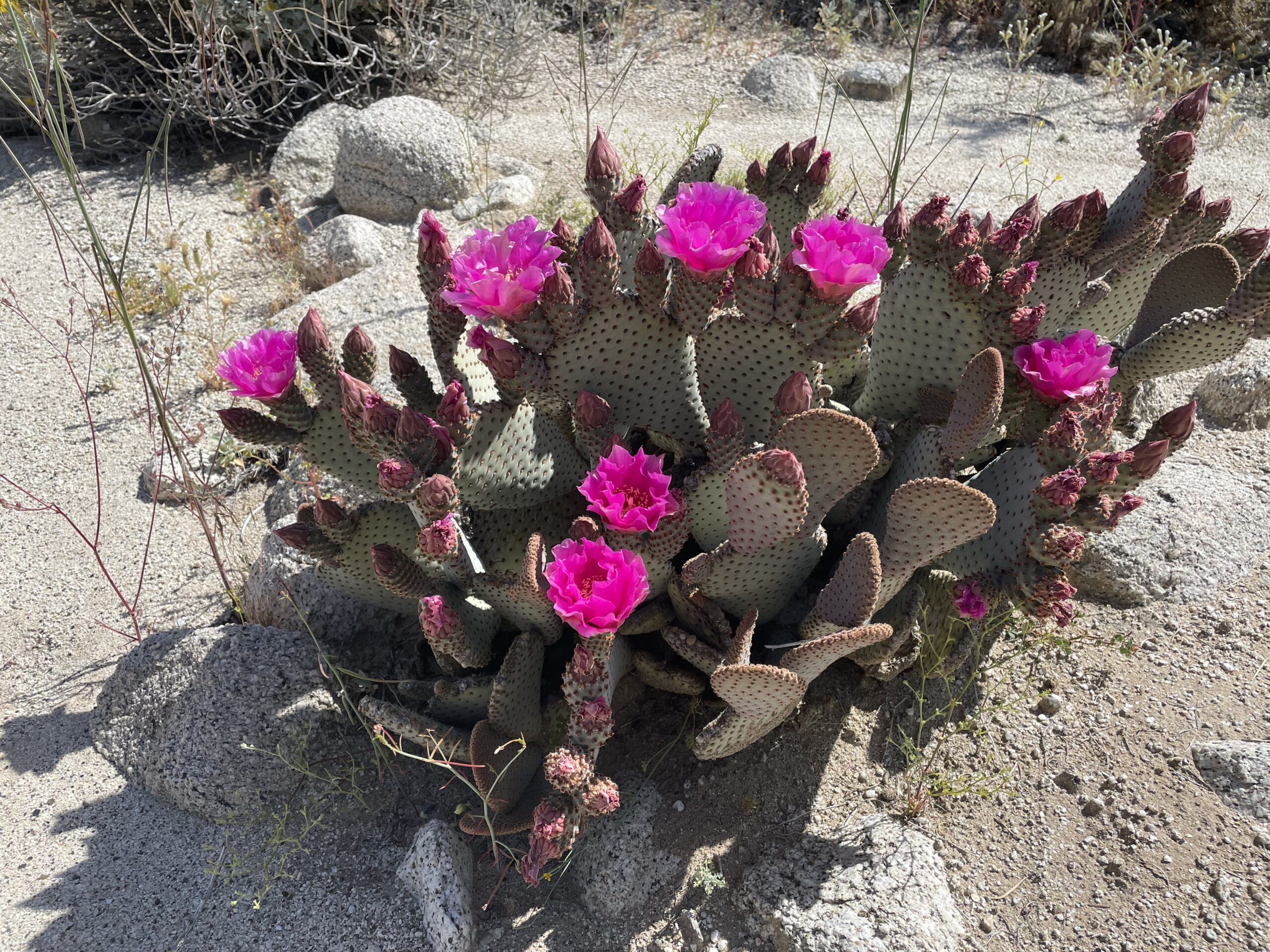
Beavertail Cactus
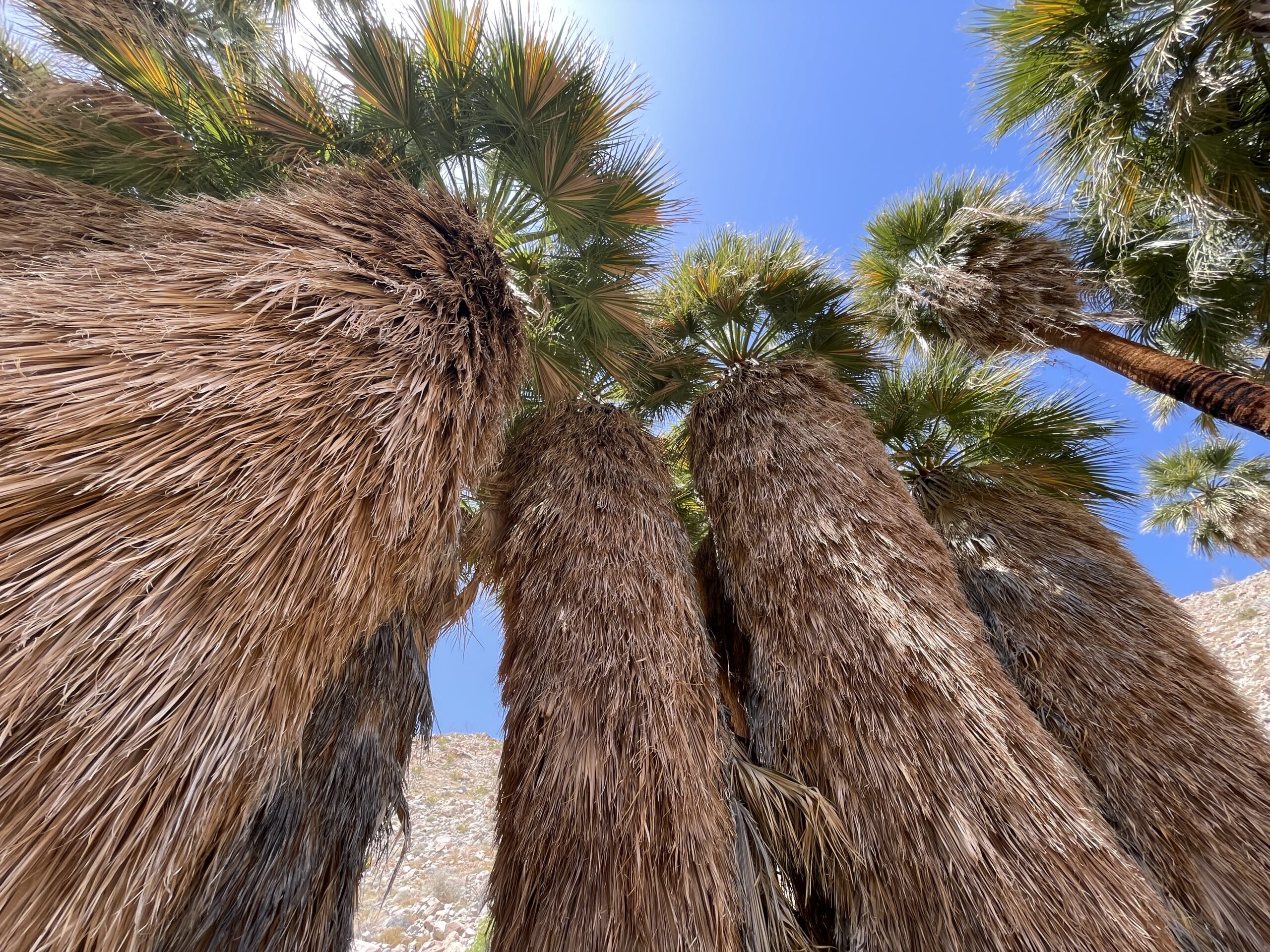
California Fan Palm
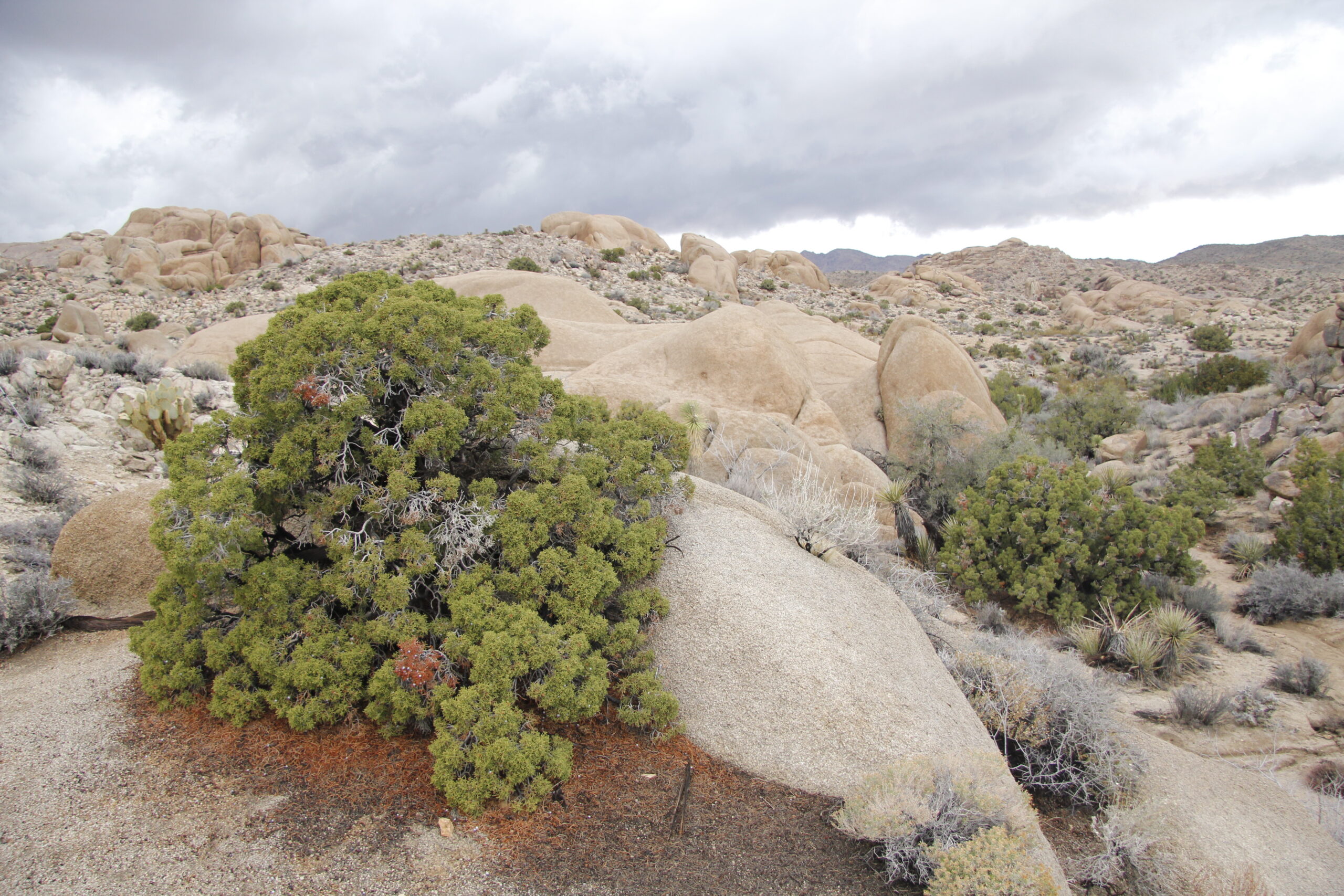
California Juniper
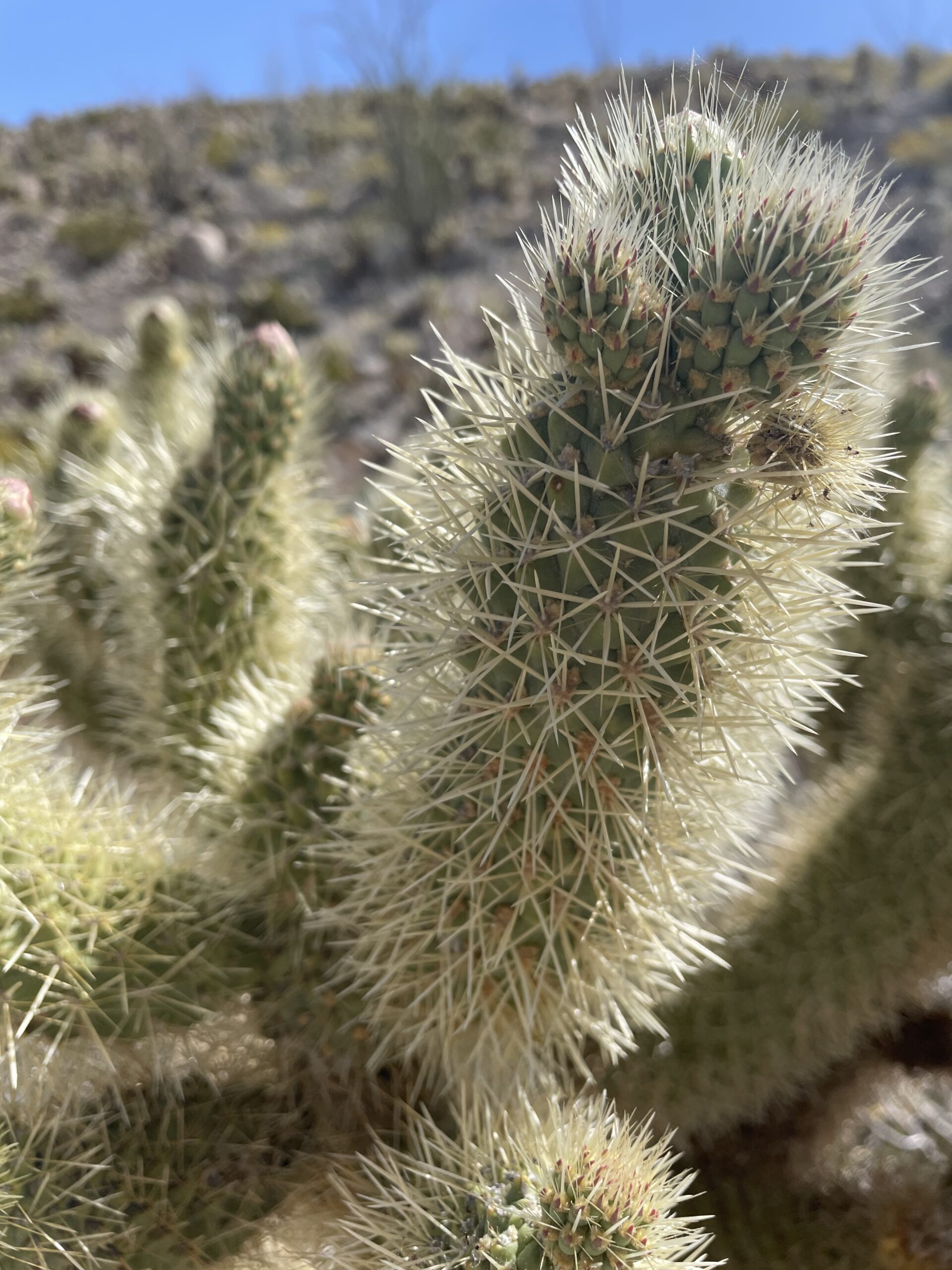
Teddy Bear Cholla
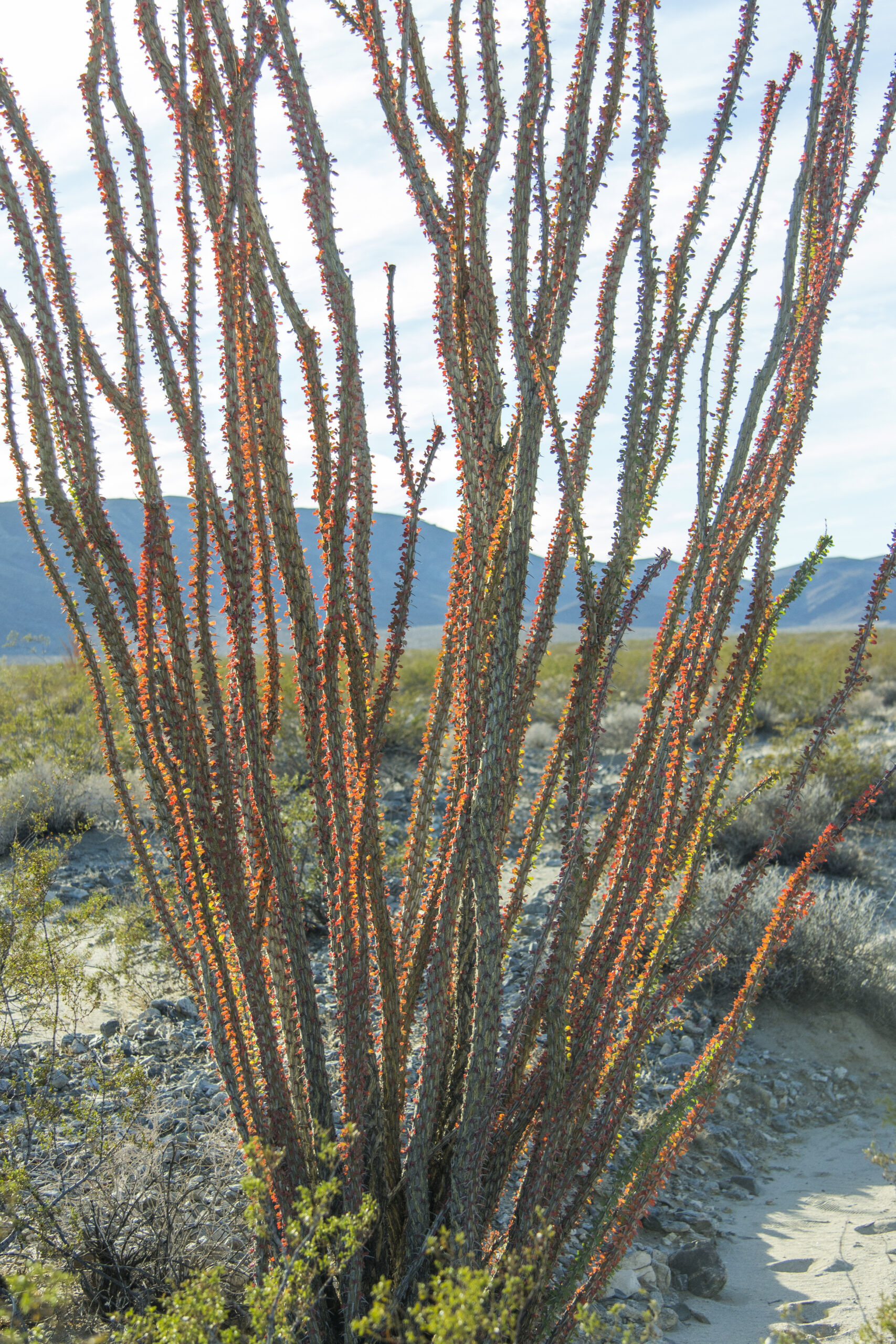
Ocotillo
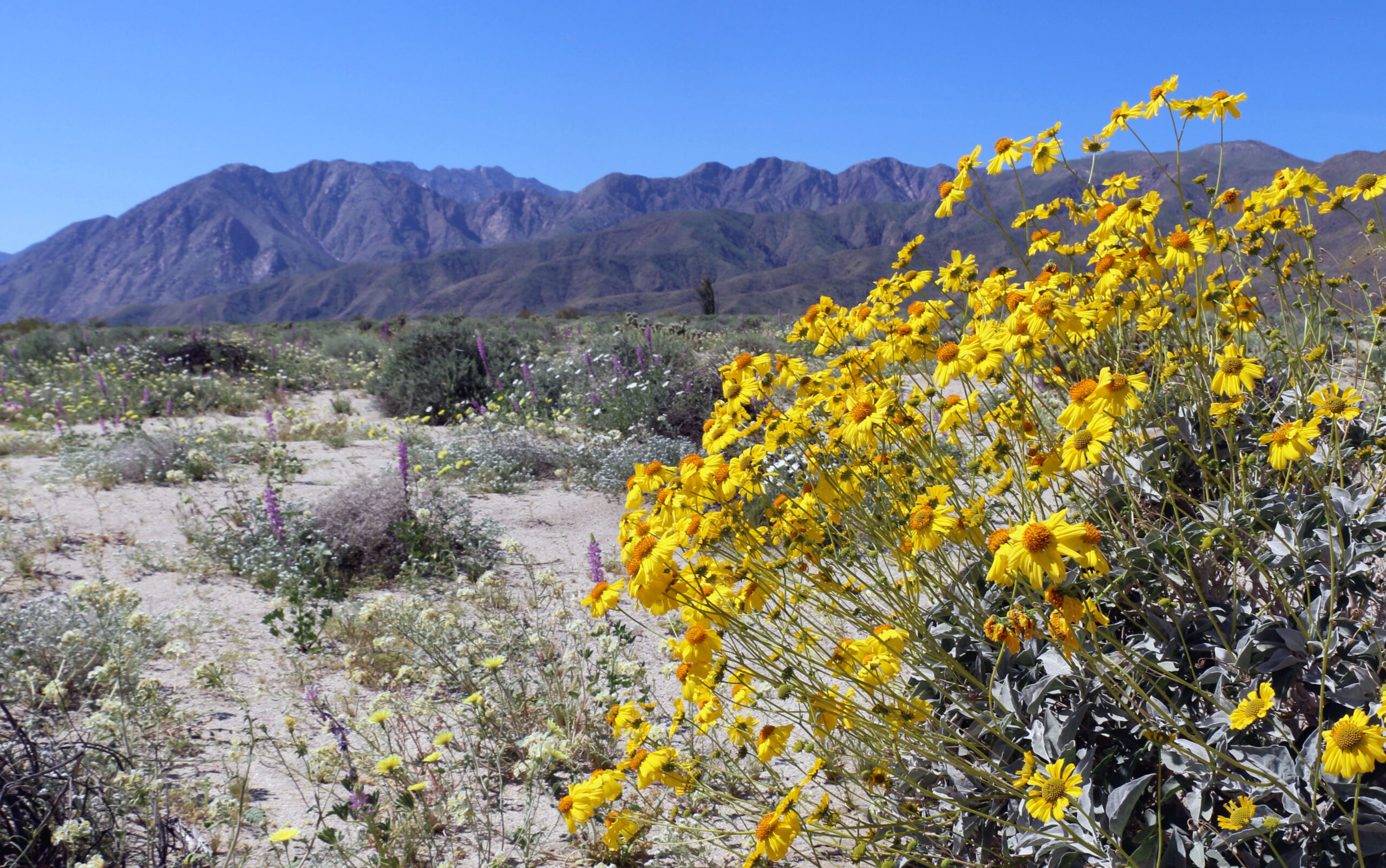
Brittlebush
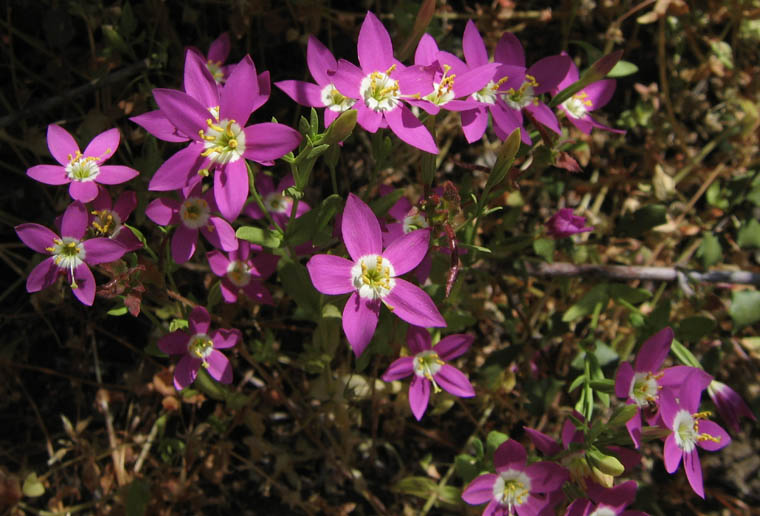
California Centaury
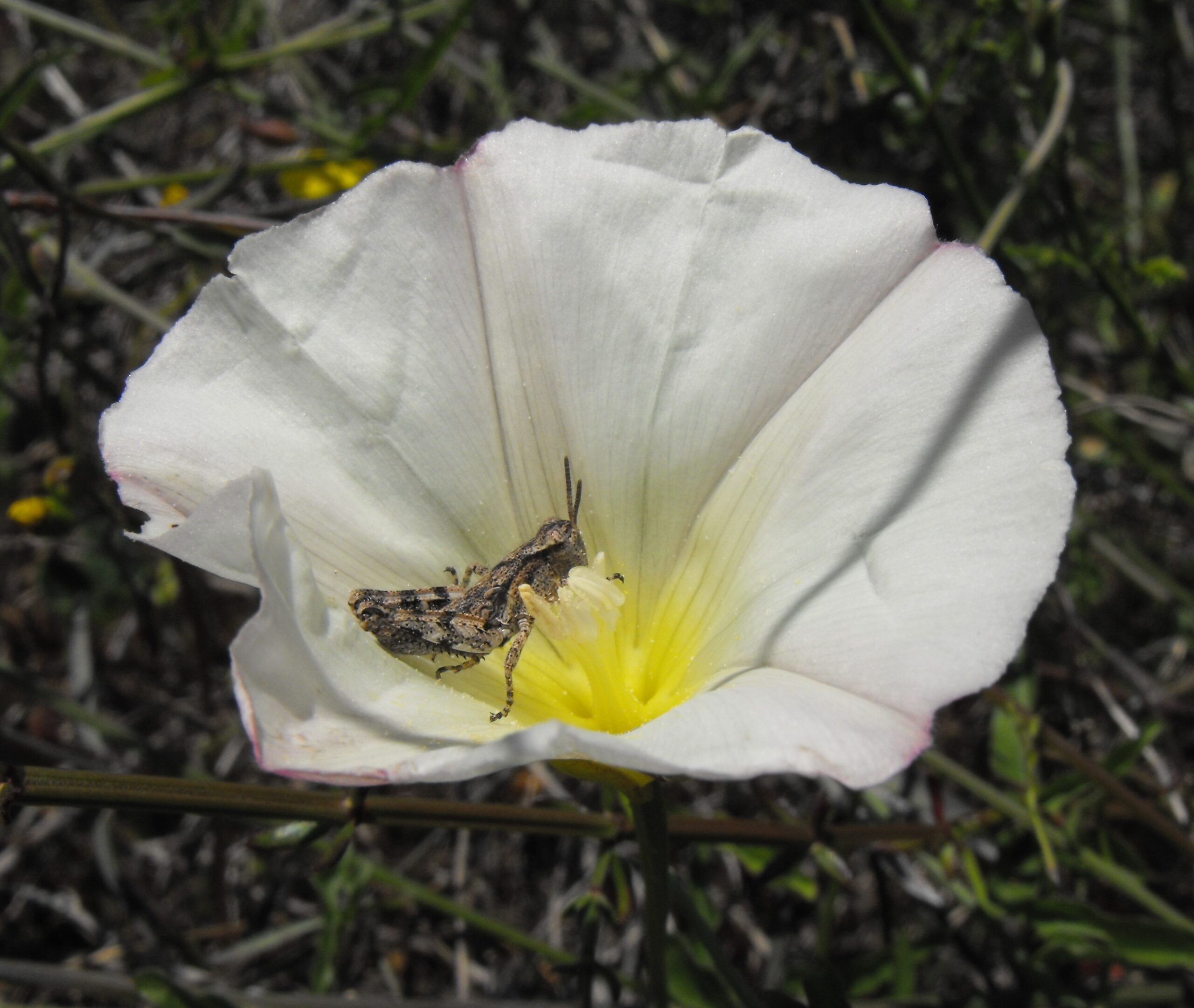
Morning Glory
Geology
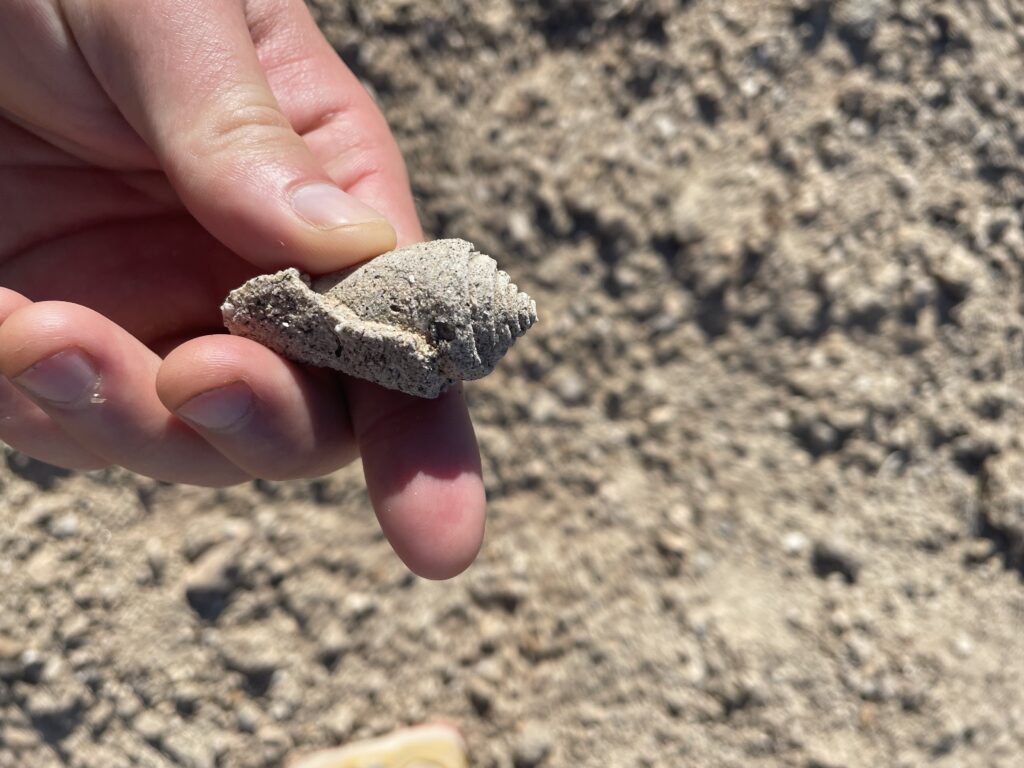
The oldest rocks in Anza-Borrego State Park have been dated back to 450 million years. During this time, the western coast of North America was under water, which led to many layers of sediment being deposited in the area. All these layers were eventually pressurized and heated to form the metamorphic rock, which was exposed over millions of years of tectonic activity – much of which we see in the mountains of Anza-Borrego today.
Around 6 million years ago, as the Baja Peninsula in Mexico pulled away from the mainland, a shallow sea crept inward into the Anza-Borrego region. This sea was called the “Imperial Sea” (an extension of the modern day Sea of Cortez in Mexico). Eventually the sea receded, leaving behind fossils from whales and walruses to mollusks and other sea creatures, many of which you might see yourself on a hike. Now, the area is an expansive desert filled with slot canyons, wind caves, wide valleys and rippling badlands.
Visit the Anza-Borrego Desert Natural History Association for more natural and historical facts.
Brief History
Original Inhabitants
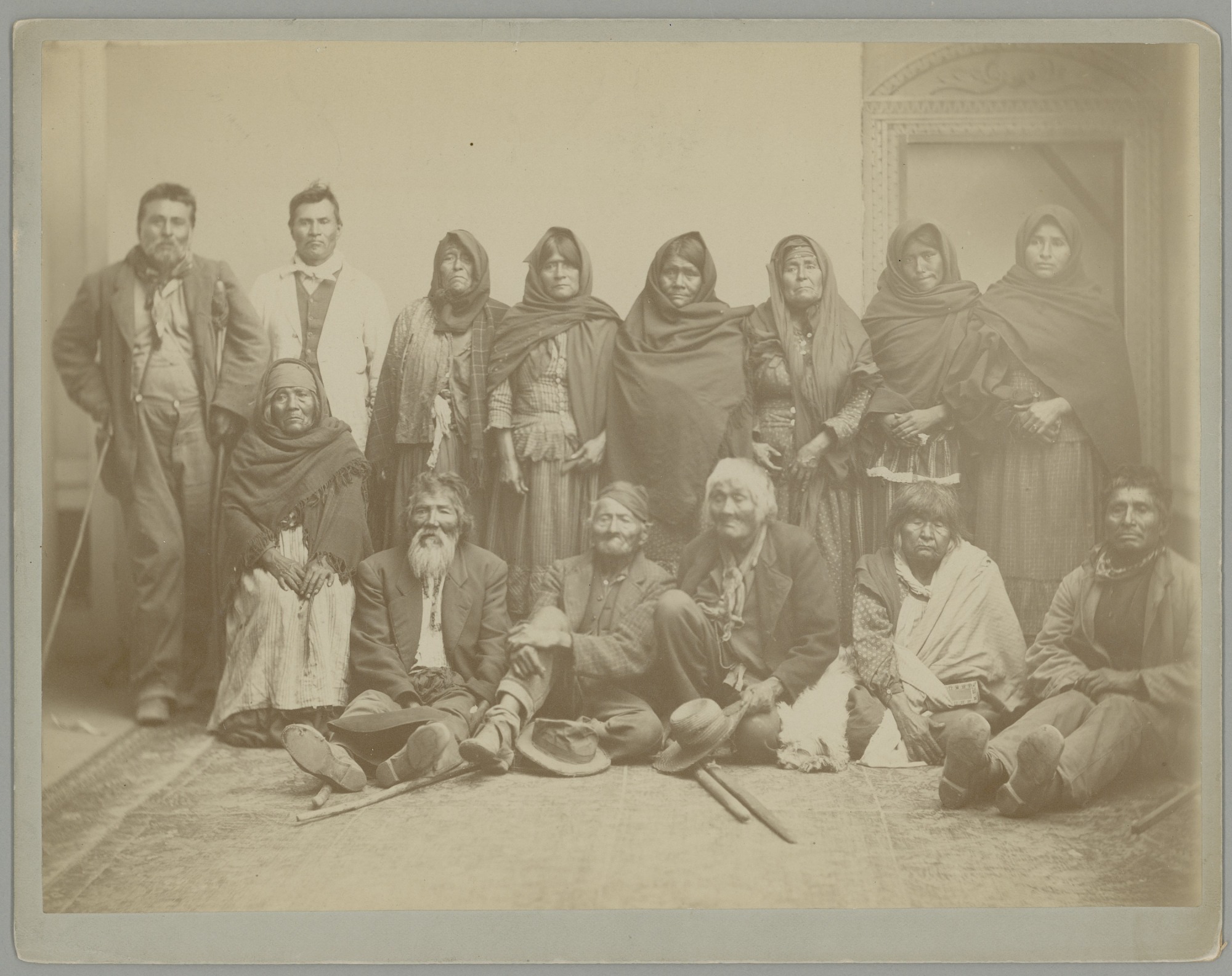
This area was originally inhabited by the Ipai, Tipai and Kamia (Kumeyaay), Cahuilla and Kuupangaxwichem (Cupeño) nations for thousands of years. Many artifacts of these tribes can be found across the park, with nearly 4,400 archaeological sites documented in the park, some of which are visible to the public on various trails and sites. These sites are protected by law, and it is illegal to touch, move, or damage these areas.
They created a thriving community in a harsh desert environment, surviving on jackrabbit, mule deer, cholla cactus, rice grasses, and from trading with other indigenous communities in the mountains and coastal areas to the west.
After the Spanish missionaries arrived, the indigenous nations lost their lands over several decades and centuries from forced removal and land treaties. Today they hold but a fraction of their cultural and historical lands.
To learn more about them visit the Imperial Valley Desert Museum (photo of traditional territories from www.ivdesertmuseum.org).
Modern History
The area is named after Juan Bautista de Anza, who traveled into the region in 1774 in his attempt to establish an inland route to coastal Spanish settlements. The Spanish word “borrego” means bighorn sheep. Homesteaders started to populate the area in 1910, eventually establishing schools, trade routes, and the community of Borrego Springs, CA which is currently the cultural and commercial heart of Anza-Borrego.
Recognizing the importance of the unique desert landscape, a group of conservationists, local officials, and public representatives advocated for the creation of a state park. Over the decades, several fortunate partnerships and land acquisitions resulted in the incredible park that we have today.
How To Support Anza-Borrego Desert State Park
A Note on Public Lands Today
Public lands in the United States exist because people chose long-term care over short-term gain. Lands that had been previously stewarded for generations by Indigenous nations. That protection is never guaranteed. It depends on laws, funding, leadership, and public attention.
Unfortunately, recent federal decisions continue to weaken protections and increase pressure from extractive use and private enterprises. This puts ecosystems, natural resources, wildlife, cultural sites, historical sites, gateway towns, local and national economy, and public access at major risk.
If you appreciate public lands and the benefits they provide to all of us, please help support them through action and conversation.
National Parks Conservation Association
National Forest Foundation
Trust for Public Land
The Nature Conservancy
The Sierra Club Foundation
The National Audubon Society