Car Camping For Beginners
Car camping is one of the easiest ways to get outdoors and experience camping. With a car you can access designated campgrounds, or go deep into forest service roads to escape crowds. Plus, you get to bring extra gear and supplies which always makes for a more comfortable camping trip. This guides gives you a comprehensive review on how to go car camping. Think comfy camping chairs, coolers with delicious food, and some extra cozy blankets and creature comforts around the campfire with friends and family. Good times.
In this article:
Where you can go car camping
Car camping gear checklist
Essential skills and safety
Stewardship and etiquette
How to plan a car camping trip
Car camping tips for beginners
Resources
What is Car Camping?
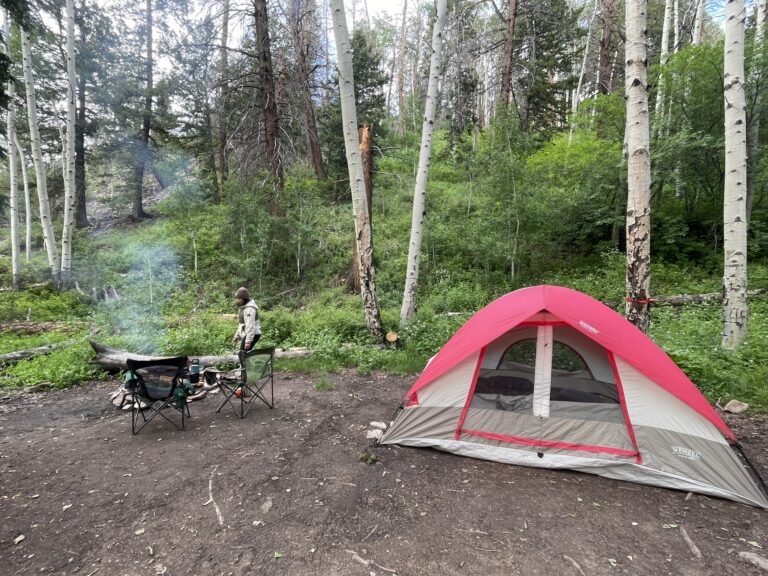
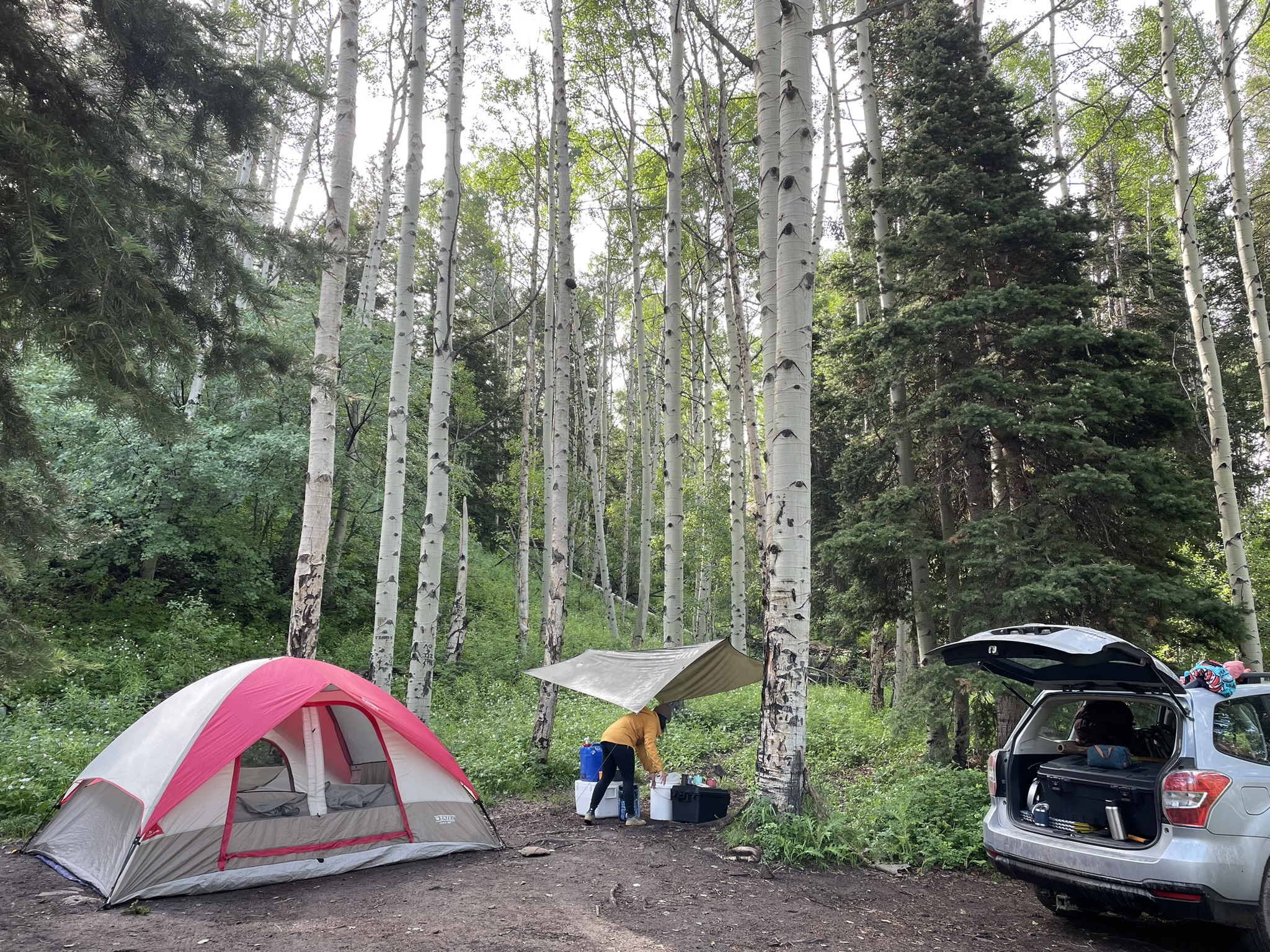
Car camping is camping in or near your car, and bringing all gear in your car. Now, the clear distinction is you are still setting up all your own camping gear. It’s just that your car was a convenient vessel to bring all your gear, food, and supplies. This is a great way to access developed campgrounds, primitive campgrounds, or get into some dispersed camping.
Now, just because your car is present does not necessarily mean it is “car camping.” For example, RV camping might involve your car, but all your equipment is inside the RV (not car camping). Likewise, you might arrive at a glamping site in your car, but they provide all the amenities, gear, and set up for you (not car camping).
Why Try Car Camping?
- Accessibility: Many campgrounds and dispersed camping areas are easily accessible by car
- Affordability: Car camping is a much cheaper way to access our beautiful public lands without spending money on lodges or hotels
- Comfort: You can bring more gear, food, and creature comforts
- Flexibility: Easy to do on a whim and
- Ease: Connect to nature without going ultra-remote
Who Should Car Camp?
- First time campers
- Families with kids
- Larger groups
- People looking for a more leisurely camp experience
- Anyone at all who enjoys camping
Public Lands For Car Camping
National Parks
- National Parks are well equipped for car campers visiting from near and far, and car camping is one of the best ways to spend a night in a National Park.
- All car camping on National Parks will require a reservation and fee.
- For a full guide on camping in National Parks, read our How To Camp In National Parks article.
National Forests And Grasslands
- With one of the largest networks of public access roads in the country, National Forests are some of the premier destinations for car camping.
- Depending on where you car camp there might be different requirements, with some destinations (like campgrounds) requiring a reservation and fee, while others do not.
- Check out our detailed guide for the Sierra National Forest, which is an excellent place to go car camping.
- For a full guide on camping in National Forests, read our How To Camp In National Forests article.
BLM Land
- Rivaling the motor vehicle access in National Forests, car camping is abundant on BLM land through their large network of recreational roads.
- Depending on where you car camp there might be different requirements, with some destinations (like campgrounds) requiring a reservation and fee, while others do not.
- For a full guide on camping on BLM land, read our How To Camp On BLM Land article.
Restrictions
- Wilderness Areas: No car camping is allowed on Wilderness Areas. Foot travel only.
- National Wildlife Refuges (USFWS): Though it is possible to find some refuges that allow camping, these areas are primarily for used conservation and typically do not allow for any kind of overnight camping.
Learn more about all of our public lands in our Intro To Public Lands article.
Where You Camp While Car Camping
Dispersed camping
Also known as backcountry camping or wild camping, this is camping on any public land without any developed campgrounds, facilities, or amenities. You establish your own campsite, or find one already established by previous campers. Depending on where you go, dispersed camping may not be allowed like in certain National Parks. This is one of the more risky but rewarding ways to go car camping.
For a full guide on dispersed camping, read our Dispersed Camping Basics article.
Primitive Campgrounds
A designated camping area with little to no amenities or facilities, usually just a place to set up your tent. You may get lucky with a fire ring, but these campgrounds are mainly to provide safe areas for people to camp in more remote places and to help protect the landscape and wildlife by preventing excessive dispersed camping. Many car camping trips have destinations to primitive campgrounds down forest service or access roads.
Developed Campgrounds
A designated camping area with basic amenities and facilities usually including fire rings, vault toilets (no water or flushing), tent platforms, potable water spigots, firewood for sale, and picnic tables. Oftentimes a campground host will be present to answer questions and collect fees. Amenities and facilities will vary depending on the campground. Many car camping trips have destinations to developed campgrounds, often down forest service or access roads.
Basic Car Camping Gear
Essentials for car camping (not a comprehensive list):
One of the Ten Essentials *
- Shelter (tent, rainfly and footprint)*
- Sleeping bag
- Extra blankets
- Sleeping pad/mattress
- Water system (filtration, container, bladder)*
- Light (headlamp, lantern)*
- Tools (hatchet, knife, multi-tool)*
- Cooking setup (stove, fuel, cooler, cookware, utensils)
- Proper clothes (boots, insulating layers, rain jacket)*
- Navigation (map, compass, GPS)*
- Fire source and firewood if allowed (lighter, starter cubes, ferro rod)*
- Medical kit*
- Sun protection*
- Proper nutrition (protein, electrolytes, sugars)*
- Soap and hand sanitizer
- Towels and trash bags
- Toilet paper and wet wipes
- Camping chairs
- Small camping table
- Day pack
- Extra tarp (for marmots that chew your brake lines)
- Spare tire (should be full-size)
- Jumper cables
- Tire patch kit and electric air pump
For a more comprehensive review on camping gear and how to get started, read our Camping Gear For Beginners article.
Skills & Safety For Car Camping
General camping skills and safety:
- Bring the 10 essentials
- Wildlife awareness
- Weather awareness
- Fire safety
- First aid skills
- How to identify and select a proper campsite
Additional car camping skills and safety:
- Check your tire pressure before going
- Refuel before settling down for camp
- Ask Rangers about road conditions
Stewardship & Etiquette For Car Camping
General stewardship and etiquette:
- Understand the Leave No Trace principles.
- Keep light levels reasonable and respectful. Especially floodlights.
- Keep noise levels reasonable and respectful. Especially music.
- Do not ever feed, approach, or disturb any wildlife.
- Pack everything out, including trash.
- Do not book extra campgrounds that you don’t need.
- Leave the place better than you found it.
Car camping stewardship and etiquette:
- Do not leave your car running or your headlights on.
- Park in proper areas and not on sensitive vegetation.
- Do not steal other campers’ parking spots for convenience.
What To Expect When Car Camping
Camping is not always as glamorous as instagram makes it out to be. And it shouldn’t be. A couple of key things to understand when you’re camping:
- It always requires some hard work.
- There will be bugs.
- There will be bad weather.
- There will be spooky sounds.
- You will get dirty and smell.
- You will forget something.
- It can feel a little scary at first.
- Weather exposure and falling tree branches are way more of a threat than animal encounters.
- You will have a lot of fun.
How To Plan A Car Camping Trip
General step-by-step plan:
- Pick a destination (NPS, NFS, BLM, etc.)
- Check local fire restrictions
- Check local road and access restrictions
- Check the weather (snow, rain, wildfire watch)
- Confirm how and where you want to car camp
- Developed campground
- Primitive campground
- Dispersed camping
- Complete any permits or reservations needed
- Plan out your meals
- Test out your gear
- Pack your car
- Learn rules/etiquette of where you are camping
- Make sure your car is ready (oil, gas, fluids)
- Let people know where you’re going
- Enjoy the journey
Car Camping Tips For Beginners
General camping tips:
- Keep first trip short (1–2 nights).
- Borrow or rent gear before buying.
- Practice setting up tent and gear at home.
- Expect the first time to be a challenge and learning experience.
Car camping tips:
- Practice packing your car efficiently (take your time doing it).
- Bring extra everything just to be sure (food, water, blankets, etc.)
- Check where your closest fuel station is relative to your campsite